
It starts with something easy to miss. A summer thunderstorm rolls through Everett, the lights flicker for a second, and everything seems fine. But inside the mechanical room or utility closet, the HVAC system just absorbed a voltage spike it was never built to handle. Over the next few weeks, the air conditioner starts cycling strangely. The furnace throws an error code. Eventually, a repair technician arrives and confirms what many Everett homeowners discover too late: a power surge quietly fried the control board.
Power surges are one of the most underestimated threats to home comfort systems in the Puget Sound region. They happen silently, often invisibly, and their damage can range from minor component wear to complete system failure. For homeowners in Everett, Mukilteo, Lynnwood, and surrounding Snohomish County communities, understanding this risk and investing in proper surge protector installation in Everett is one of the smartest decisions you can make for your home.
What Is a Power Surge and Why Does It Affect HVAC Equipment?
A power surge is a sudden and brief spike in electrical voltage that exceeds the normal 120-volt or 240-volt supply running through a home. These spikes can last just microseconds, but they carry enough energy to damage sensitive electronics and motor windings inside complex equipment.
HVAC systems are among the most vulnerable appliances in any home because they rely on sophisticated electronic control boards, variable-speed motors, capacitors, and compressors. All of these components are designed to operate within specific voltage ranges. When a surge sends excess voltage into the system, it can overheat insulation, degrade circuit boards, and permanently damage compressors.
Common Sources of Power Surges in Everett Homes
Everett homeowners face surge risks from multiple directions:
- Lightning strikes near utility lines during Pacific Northwest storms
- Grid switching by Snohomish County PUD during load balancing
- Large appliances like refrigerators and washing machines cycling on and off
- Faulty wiring or aging electrical panels inside older homes
- Utility restoration surges after a power outage
- EV chargers and high-draw appliances on shared circuits
Internal surges from appliances cycling on and off actually account for the majority of cumulative surge damage in most homes. Each small surge chips away at the sensitive electronics inside your HVAC system over months and years, shortening its lifespan even when no single event causes obvious failure.
How Power Surges Specifically Damage HVAC Systems
Modern HVAC systems are far more electronically sophisticated than units from two decades ago. Variable-speed compressors, smart thermostats, and communicating controls all depend on circuit boards and sensors that are highly sensitive to voltage irregularities.
Control Board Failure
The control board is the brain of your heating and cooling system. It manages startup sequences, monitors sensors, and communicates between components. A direct surge can burn out the microprocessors on this board, resulting in a system that simply will not respond. Replacing a control board on a modern HVAC unit typically costs between $400 and $900 in parts alone, not including labor.
Compressor Damage
The compressor is the heart of the air conditioning side of your system, and it is also the most expensive component to replace. Surge damage to compressor motor windings can cause hard starts, reduced efficiency, and eventual lockup. A failed compressor in an Everett home often means a repair bill that rivals the cost of full system replacement.
Capacitor and Contactor Degradation
Capacitors help start and run motors, while contactors switch high-voltage power to the compressor. Both are vulnerable to voltage spikes. Degraded capacitors lead to hard-start issues, reduced motor efficiency, and eventual motor failure if not addressed.
Thermostat and Sensor Disruption
Smart thermostats and temperature sensors rely on low-voltage circuits that are especially vulnerable to surges. A spike can knock out thermostat communication, cause erratic temperature readings, or damage the sensors that keep your system running efficiently.
Why Everett Homes Are Particularly Vulnerable
Everett sits in a region where seasonal weather patterns, older residential infrastructure, and growing energy demands all combine to create above-average surge risk.
- Many homes in neighborhoods like Bayside, Holly, and Pinehurst were built in the 1960s through 1980s with electrical panels that were not designed for modern electrical loads
- The Puget Sound area experiences regular windstorms and lightning events that stress utility infrastructure
- Snohomish County PUD serves a large and growing customer base, and grid switching events are common during peak demand periods
- The rise of home EV charging, heat pumps, and smart home technology has dramatically increased the electrical demand inside typical Everett households
Homes with outdated 100-amp panels are especially at risk. These panels lack the capacity to support modern appliances cleanly, and the resulting internal surges compound the risk from external sources.
How Surge Protector Installation in Everett Protects Your HVAC System
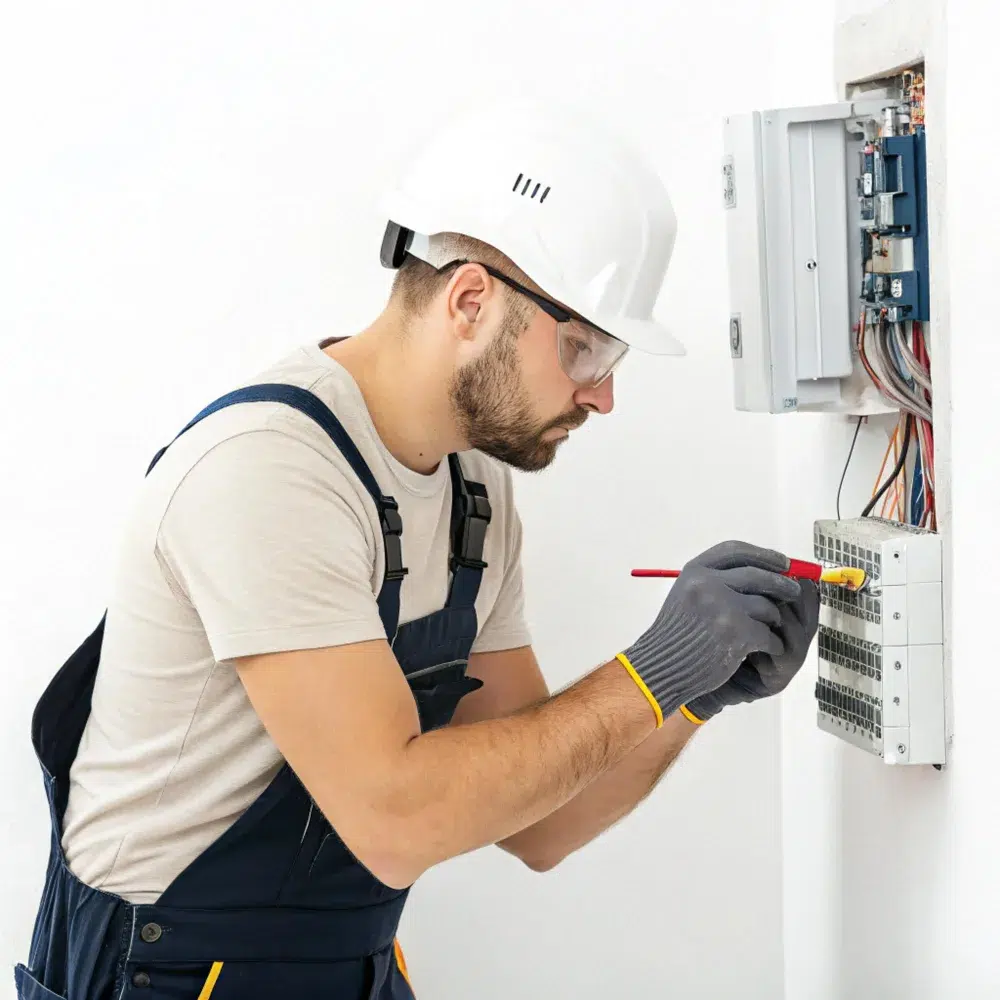
A whole-home surge protection device, installed at the main electrical panel by a licensed electrician in Everett, is the most effective way to defend your HVAC system and all other connected electronics from voltage spikes.
Whole-home surge protectors work by detecting voltage above the safe threshold and diverting the excess energy safely to ground before it can travel through your home’s circuits. Unlike plug-in surge strips, a panel-mounted device protects every circuit in the house simultaneously, including the 240-volt circuit your air conditioner and heat pump rely on.
Two-Layer Surge Protection for Maximum Defense
Many electrical professionals recommend a two-layer approach to surge protection:
- A whole-home SPD (Surge Protection Device) installed at the main electrical panel to catch large, fast surges coming from the utility
- Point-of-use surge protectors on sensitive electronics and appliances to catch smaller residual surges that pass through the first layer
For HVAC systems specifically, some manufacturers offer HVAC-dedicated surge protection devices that mount directly to the outdoor unit or air handler. These provide a third layer of defense and are worth considering for newer or high-efficiency systems.
What to Look for in a Whole-Home Surge Protector
- UL 1449 4th Edition listed rating
- A clamping voltage of 400V or lower
- Surge current capacity of at least 40,000 amps
- Status indicator lights to confirm the device is functioning
- Built-in thermal fusing for fail-safe shutdown
A properly rated and installed whole-home surge protector can protect tens of thousands of dollars in HVAC equipment, smart home devices, and appliances for a relatively modest investment.
When Should an Everett Homeowner Call an Electrician After a Surge Event?
If your home experiences a noticeable power surge, there are several signs that warrant an immediate call to a licensed electrician in Everett:
- The HVAC system will not power on after the event
- Breakers have tripped and will not reset
- You notice a burning smell near the electrical panel or HVAC unit
- Smart home devices and outlets are unresponsive
- The thermostat display is blank or showing error codes
- Lights throughout the home are flickering or dimmer than normal
These symptoms suggest that internal wiring or connected equipment may have sustained damage that requires professional assessment. Attempting to reset breakers or operate damaged equipment without an inspection can create fire hazards.
The Cost of Waiting vs. the Value of Prevention
HVAC system repairs resulting from surge damage are rarely covered under standard homeowner insurance policies unless the surge originated from a direct lightning strike. Even then, documentation requirements can make claims difficult. Surge-related repairs to heating and cooling equipment in the Puget Sound area commonly range from a few hundred dollars for a control board to several thousand for compressor or system replacement.
By comparison, professional surge protector installation in Everett represents a fraction of that cost and provides ongoing protection for the life of your electrical system. It is a one-time investment that covers not just your HVAC system but every connected appliance, entertainment system, and smart device in your home.
Frequently Asked Questions
Can a power surge permanently destroy an HVAC system?
Yes. A significant voltage spike can burn out the compressor motor windings or destroy the main control board, both of which are expensive to replace and can make full system replacement more cost-effective than repair.
How often do power surges occur in Everett homes?
Electrical monitoring studies suggest that the average home experiences dozens of small surge events each year, most of them internal and caused by appliances cycling on and off. Larger external surges from storms or grid switching events are less frequent but carry more damaging potential.
Does surge protection also help with HVAC efficiency?
Indirectly, yes. By protecting control boards and motor components from cumulative voltage stress, surge protection helps maintain system efficiency over time and extends equipment lifespan.
Is a plug-in surge protector enough for an HVAC system?
No. Central air conditioners and heat pumps are hardwired appliances connected to dedicated 240-volt circuits. They cannot use plug-in surge strips. Only a panel-mounted whole-home surge protection device or a dedicated HVAC surge protector provides meaningful protection for these systems.
How do I choose the right electrician in Everett for surge protection installation?
Look for a licensed and insured residential electrician with experience in panel-level surge protection installation. A reputable electrician will evaluate your current panel capacity, recommend appropriately rated devices, and ensure the installation meets Washington State electrical code requirements.
Schedule Your Surge Protection Inspection with In-House Electrical Services Today
Your HVAC system is one of the most expensive investments in your Everett home, and one preventable power surge should not be the reason it fails years ahead of schedule. At In-House Electrical Services, our licensed and background-checked electricians have been protecting Puget Sound homes since 2009 with expert surge protector installation in Everett and throughout Snohomish County.
We offer upfront, fixed pricing with no hidden fees, flexible financing options including 24-month interest-free plans, and 24/7 emergency response when you need it most. Whether you need a whole-home surge protection device installed, an electrical panel inspection after a storm event, or a full safety evaluation of your home’s electrical system, our team is ready to help.
Call In-House Electrical Services at 425-760-3203 or schedule your service online at inhouseelectric.com. Protect your HVAC system, your appliances, and your family before the next surge event finds your home unprotected.