
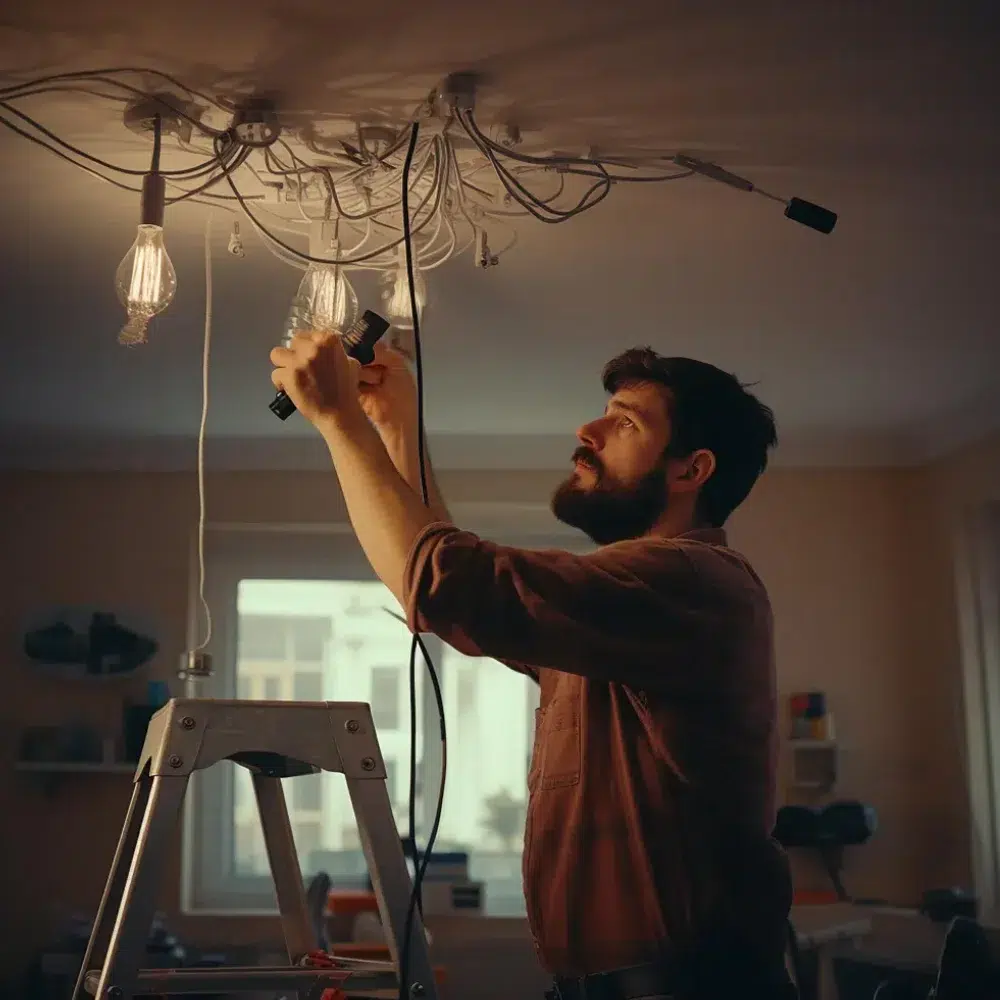
It was getting dark early in Everett, and a homeowner wanted the backyard to feel safer and more inviting. So, one by one, more lights went in: a floodlight near the garage, pathway lights along the walkway, bright fixtures around the patio, and accent lights aimed at the trees. What started as a simple Everett outdoor lighting upgrade soon turned into a collection of fixtures that did not work well together.
At first, the extra brightness seemed like an improvement. But after sunset, the yard looked strangely harsh. Some areas were glaring, others were still dark, and the home lost the warm appearance it had during the day.
The problem was not a lack of light. It was too much light without a plan.
The right outdoor lighting does not simply make an Everett yard brighter. It creates balance between visibility, comfort, security, landscaping, and the way people actually use the property after dark.
Why Can Too Much Outdoor Lighting Make a Yard Look Worse?
Outdoor lighting works best when every fixture has a purpose. Adding lights without considering placement, beam direction, brightness, color temperature, and existing light sources can make a property feel cluttered instead of inviting.
This can be especially noticeable during Everett’s darker and wetter months, when homeowners may rely more heavily on exterior lighting around walkways, entrances, patios, driveways, and landscaping.
Too much or poorly positioned lighting can create several problems:
- Harsh glare that makes it uncomfortable to look toward the home
- Uneven illumination that leaves some areas bright while others remain difficult to see
- Overlapping beams that reduce natural contrast and depth in the landscape
- Fixture clutter that draws attention away from the home’s architecture and landscaping
- Light spill into windows or neighboring properties
- Unnecessary energy use when fixtures operate longer or brighter than needed
The goal is not simply to increase brightness. It is to create lighting that works for the way each area is used.
How Does Outdoor Lighting in Everett Create a More Balanced Yard?
A balanced landscape lighting system starts with the property rather than a predetermined number of fixtures.
A pathway, driveway, front entrance, garden, patio, deck, and backyard each have different lighting needs. A walkway may need low-level illumination to make changes in elevation easier to see, while a mature tree might benefit from subtle accent lighting.
Security lighting has a different purpose. A motion-activated fixture can provide broader illumination when movement is detected without keeping an entire yard brightly lit throughout the night.
Depending on the property, a thoughtfully planned system may include:
- Low-voltage landscape lighting
- LED pathway fixtures
- Porch and entryway lighting
- Motion-sensor security lights
- Dusk-to-dawn controls
- Smart lighting controls
- Landscape accent fixtures
- Driveway and garage lighting
The important part is how these components work together.
For Everett homeowners, outdoor fixtures and their connections are exposed to moisture and changing weather conditions. Using appropriate outdoor-rated components, protecting electrical connections, and positioning fixtures correctly can help support a reliable installation.
What Are the Biggest Outdoor Lighting Mistakes Everett Homeowners Make?
Many over-lit yards develop gradually. A homeowner notices one dark area and adds a fixture. Later, another area seems too dim, so another light is installed. Eventually, the property has plenty of fixtures but no cohesive lighting plan.
Here are some common mistakes to watch for.
1. Using Bright Lights Everywhere
A brighter fixture is not automatically a better fixture.
Excessive output can create glare and cause nearby areas to appear darker by comparison. In many situations, improving fixture position or beam direction can accomplish more than simply increasing brightness.
2. Pointing Lights Directly Toward the House
Fixtures aimed aggressively at walls can create harsh hot spots and unwanted glare.
Instead, lighting can be positioned to emphasize architectural details without directing the strongest part of the beam toward windows or areas where people regularly look.
3. Mixing Incompatible Color Temperatures
Different light colors can make an outdoor space feel visually disconnected.
Using a consistent lighting palette can create a more cohesive appearance, particularly when pathway, landscape, entryway, and patio fixtures are visible at the same time.
4. Installing Fixtures Too Close Together
Pathway lights placed at regular, tight intervals can create a runway effect.
Spacing fixtures according to the walkway, surrounding landscaping, fixture output, and beam spread can provide useful illumination without making every few feet look identical.
5. Ignoring Light Spill
Outdoor lighting should stay focused on the areas that actually need illumination.
Poorly aimed floodlights or bright fixtures can send unwanted light toward windows, neighboring properties, or areas that serve no practical purpose.
6. Treating Security Lighting as the Entire Design
Security is important, but an outdoor lighting system does not need to make a home look like a commercial parking lot.
Motion sensors, strategically positioned fixtures, and appropriate illumination levels can improve visibility while allowing the property to retain a comfortable residential appearance.
How Should You Plan Outdoor Lighting Before Installation?
A little planning can prevent unnecessary fixtures and repeated adjustments later.
Step 1: Identify the Dark Zones
Walk around the property after sunset.
Look at the driveway, front steps, walkways, side yards, patio, deck, garage, and backyard. Pay attention to areas where people actually walk or gather rather than trying to illuminate every part of the property.
Step 2: Define the Purpose of Each Area
Decide whether an area needs:
- Safety lighting
- Security lighting
- Accent lighting
- Functional lighting
This prevents one type of fixture from being used everywhere.
Step 3: Choose the Focal Points
Identify the architectural or landscape features you want to notice after dark.
A mature tree, entryway, stonework, garden, or patio can become a nighttime focal point with carefully positioned accent lighting instead of numerous bright fixtures.
Step 4: Control Glare
Look at the lighting from the perspective of someone standing or walking through the property.
The fixture should illuminate the intended surface without shining directly into people’s eyes or nearby windows.
Step 5: Use Controls Instead of Constant Brightness
Outdoor lighting does not necessarily need to operate at full output throughout the entire night.
Timers, motion sensors, dusk-to-dawn controls, and smart lighting zones can help match illumination to how the property is being used.
Step 6: Know When Electrical Work Requires a Professional
Homeowners can identify dark areas, glare, poorly aimed fixtures, and lighting zones as part of the planning process.
However, projects involving new wiring, outdoor circuits, electrical connections, transformers, breaker issues, or modifications to an existing electrical system should be evaluated by a licensed electrician.
Outdoor electrical equipment is exposed to moisture and changing weather. Appropriate outdoor-rated components, protected connections, proper grounding, and compliant installation practices are important considerations.
Working with a licensed and properly insured professional can also give homeowners greater confidence when electrical installation or modifications are involved. In-House Electric states that its residential electricians are licensed and insured and provides same-day service based on scheduling priority and emergency demand.
When Should You Call an Electrician in Everett for Outdoor Lighting?
Not every outdoor-lighting issue requires replacing the entire system.
Simple planning decisions, such as identifying where more visibility is needed or adjusting the direction of an accessible fixture, are different from electrical troubleshooting or installation work.
Consider professional evaluation if outdoor lights:
- Flicker repeatedly
- Become unusually dim
- Stop responding to timers or controls
- Trip a breaker
- Show signs of moisture damage
- Have exposed or damaged wiring
- Stop working after weather exposure
- Cause unusual electrical behavior
An electrician can help determine whether the underlying issue involves damaged wiring, a failing transformer, faulty fixtures, poor connections, improper installation, or an unsuitable circuit.
For Everett homeowners, this distinction matters. Replacing a fixture may not solve a problem caused by the wiring, connection, control, or electrical system supplying it.
In-House Electric provides residential electrical services that include lighting installation and electrical troubleshooting. Its emergency service page also confirms 24/7 emergency electrical service for urgent residential electrical problems.
If an outdoor electrical issue becomes urgent, fast response can matter. The company states that its emergency service includes same-day response and that most emergency repairs can be completed during the same visit when the necessary parts and equipment are available.
What Are the Benefits of Well-Planned Outdoor Lighting in Everett?
Well-planned exterior lighting can improve several parts of a home without requiring a large number of fixtures.
It can make walkways and entrances easier to navigate after dark, make patios and decks more comfortable to use, highlight landscaping, and improve visibility around areas that receive regular nighttime traffic.
It can also help homeowners avoid spending money on fixtures that do not solve the original problem.
For example, if the problem is glare, adding another bright fixture may make the situation worse. If the problem is an unlit walkway, carefully positioned pathway lighting may be more appropriate. If the problem is an electrical fault, replacing bulbs or fixtures may not address the underlying cause.
The best approach is to identify the problem first and then choose the appropriate lighting solution.
When choosing an electrician, homeowners should look beyond the first price they see. Honest, upfront pricing, no hidden fees, and quality workmanship can make it easier to understand what is being recommended and what work is actually needed. In-House Electric specifically promotes upfront pricing and no hidden fees, along with licensed and insured service.
Reliable scheduling matters, too. Fast, on-time service can be especially helpful when a lighting issue affects an entryway, driveway, or another frequently used area of the property. In-House Electric lists fast, on-time service among its service advantages.
What Should You Do If Your Yard Already Has Too Many Lights?
You do not necessarily need to remove everything and start over.
An evaluation of the existing lighting system can help determine which fixtures are useful and which ones create glare, redundancy, excessive brightness, or unnecessary light spill.
Depending on the condition of the system, improvements may include:
- Removing redundant fixtures
- Repositioning poorly aimed lights
- Adjusting beam direction
- Replacing harsh fixtures with more appropriate LED options
- Separating fixtures into functional lighting zones
- Adding timers, motion sensors, or smart controls
- Improving the protection of outdoor electrical connections
- Testing the complete system after dark
If the project involves several upgrades or improvements, homeowners can also ask about payment options before work begins. In-House Electric offers flexible financing options, including promotional 0% interest financing for qualified customers. Its financing page specifically lists lighting upgrades and installations among eligible residential electrical services. Financing is subject to credit approval and applicable lender terms.
This approach can turn an over-lit yard into a more intentional outdoor environment without automatically adding more equipment.
Frequently Asked Questions About Outdoor Lighting in Everett
What makes outdoor lighting look too bright?
Outdoor lighting can look too bright when fixtures produce more light than an area needs, beams point toward viewers, or several fixtures illuminate the same surface unnecessarily.
Why does my yard still look dark with many lights?
A yard can still feel dark when lighting is poorly positioned. Glare, narrow beam angles, uneven coverage, and excessive contrast can make brightly lit areas compete with darker surroundings.
How can outdoor lighting improve home security?
Strategically positioned entryway, pathway, driveway, and motion-sensor lighting can improve nighttime visibility and reduce poorly illuminated areas around the property. Lighting should support visibility rather than be treated as a guarantee of security.
When should I hire an electrician for outdoor lights?
A licensed electrician should evaluate work involving new wiring, outdoor circuits, electrical connections, breaker problems, exposed wiring, recurring electrical faults, or other issues that go beyond replacing a bulb or making a basic fixture adjustment.
How can I reduce outdoor lighting energy use?
Efficient LED fixtures, timers, motion sensors, dusk-to-dawn controls, and smart lighting zones can help reduce unnecessary operating time while maintaining useful illumination where it matters.
Do Not Keep Adding Lights Without Solving the Problem
Your Everett yard may not need another fixture. It may need a better understanding of where, why, and how the existing lighting is being used.
If your exterior feels overly bright, uneven, cluttered, or strangely dark despite having multiple fixtures, adding another light may not solve the problem. Start by evaluating the existing system, identifying what each fixture is supposed to accomplish, and determining whether the issue is related to placement, controls, equipment, or the electrical system.
In-House Electric can help Everett homeowners with residential lighting installation, electrical troubleshooting, and related electrical work.
If you are considering an outdoor-lighting project, free estimates are available, allowing you to discuss the scope of work and receive clear pricing before moving forward.
For larger lighting improvements, financing options can also make it easier to move forward. Qualified homeowners may be eligible for promotional 0% interest financing, subject to credit approval and lender terms.
Do not keep adding lights and hoping the yard improves. Have the problem assessed and create a lighting system that works with your home instead of competing with it. Call In-House Electric at (425) 760-3203 to discuss your outdoor lighting needs in Everett.