
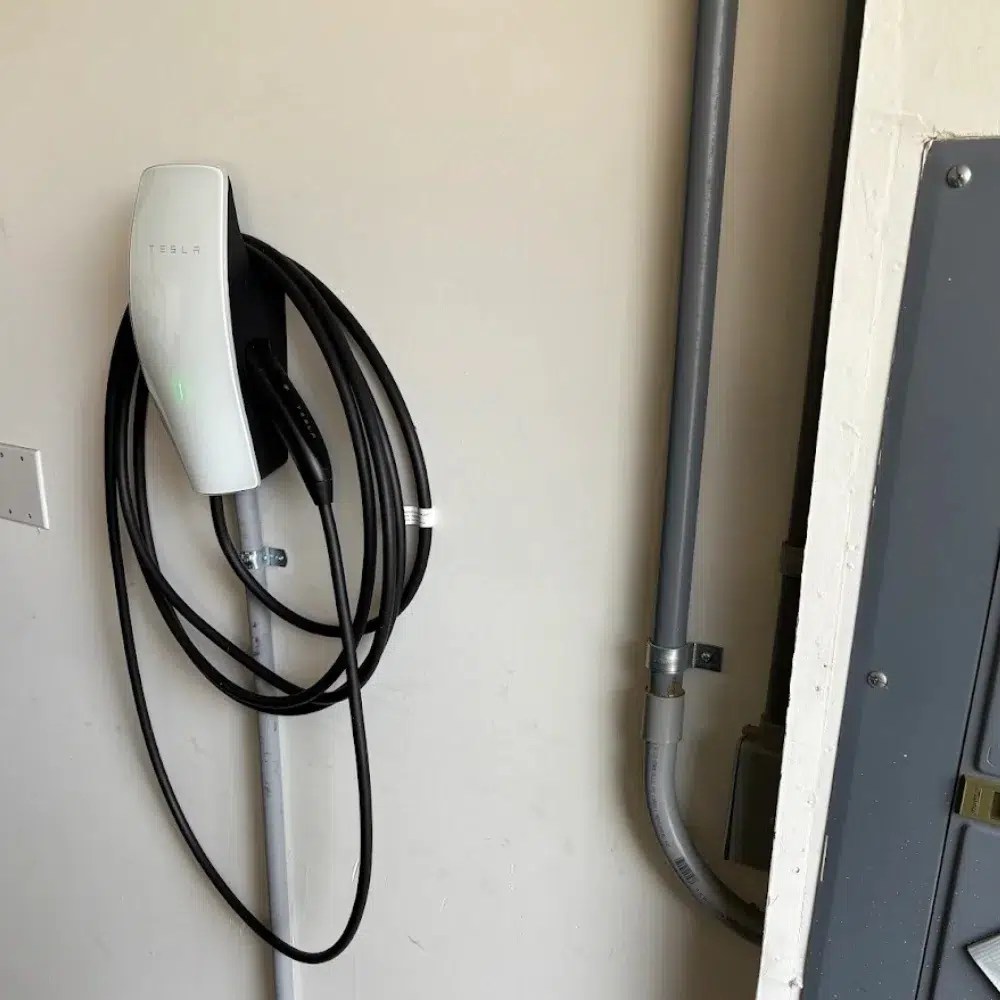
Picture an Everett homeowner pulling a new EV into the garage for the first time. The charging location looks perfect, but there is one problem: the electrical panel sits across the house, with a finished ceiling, painted walls, and remodeled rooms between the two points. Cutting a long drywall channel for new wiring could disturb a home the owner has spent years improving.
Fortunately, residential EV charger installation in Everett does not always require opening large sections of finished walls. Electricians can often use attics, crawl spaces, existing wall cavities, and carefully planned conduit routes to reach the garage while limiting visible disruption. The key is not hiding the wire at any cost. It is finding the safest code-compliant route before making the first opening.
Why Does EV Charger Wire Routing Matter in a Finished Everett Home?
A Level 2 home charger places a substantial continuous electrical load on a residential electrical system. Unlike adding a standard receptacle a few feet from an existing circuit, an EV charger may require a new dedicated branch circuit running directly from the electrical service panel to the charging location.
That becomes more complicated when the panel and garage sit far apart.
Everett has a varied housing stock, including older homes near established neighborhoods such as Bayside, Lowell, and Port Gardner as well as newer properties around Silver Lake and other residential areas. Different layouts can present different routing challenges. Finished basements, remodeled garages, vaulted ceilings, insulation, framing, plumbing, HVAC components, and limited attic access can all affect the route.
A qualified electrician should therefore determine the pathway before deciding where walls need access.
How Can Residential EV Charger Installation in Everett Avoid Major Wall Damage?
Electricians have several potential pathways available. The right option depends on the home’s construction, panel location, charger position, circuit requirements, and accessible spaces.
1. Route the Circuit Through an Accessible Attic
An attic may provide one of the least visually disruptive routes when the electrical panel and garage sit beneath or near accessible attic space.
An electrician may route the appropriately sized conductors or cable upward from the panel area, across an accessible attic pathway, and down toward the EVSE location.
However, attic access does not automatically make the route simple. The electrician still needs to consider framing, insulation, required cable protection, temperature conditions, drilling locations, and other electrical systems.
The goal should remain code compliance and physical protection rather than simply choosing the shortest line between two points.
2. Use a Crawl Space When the Home Layout Allows It
Some Everett homes provide usable crawl-space access beneath the living area. In the right property, that space can create another concealed pathway between the panel and garage.
An electrician can evaluate whether a circuit can travel downward near the panel, across the accessible area, and upward near the charging location.
Crawl-space conditions matter. Moisture, structural obstacles, plumbing, HVAC equipment, accessibility, and requirements for securing and protecting the wiring can influence whether this option makes sense.
3. Fish Wiring Through Existing Wall Cavities
Sometimes neither the attic nor crawl space provides the entire route. An electrician may instead use accessible wall cavities to conceal portions of the EV charger electrical wiring.
Wire fishing requires careful planning because framing members, fire blocking, insulation, plumbing lines, and existing electrical cables may interrupt what appears to be an open cavity.
Small strategic access points can sometimes provide a better solution than opening a long strip of drywall. Electricians may also use specialized tools to determine practical pathways before creating access openings.
4. Use Conduit Where Concealed Routing Is Impractical
A completely hidden circuit is not always the best answer.
For example, a finished garage may contain framing or structural conditions that make extensive wire fishing impractical. A properly planned electrical conduit or raceway can provide a neat, protected route while avoiding widespread drywall removal.
This approach can work particularly well along garage walls or other areas where a professionally installed raceway does not interfere with the home’s finished living spaces.
A good installation balances appearance with accessibility, electrical protection, and code requirements.
What Should an Electrician Check Before Choosing the Wiring Route?
Finding an available path represents only part of the job. The existing electrical system must support the proposed EV charging load.
A professional assessment should generally consider:
- Electrical service and panel capacity: A load calculation can help determine whether the existing service can accommodate the charger.
- Charger requirements: The electrician needs to account for the EVSE manufacturer’s specifications and intended charging output.
- Circuit length: Longer runs can affect conductor sizing, installation complexity, voltage drop considerations, and project cost.
- Panel-to-charger pathway: The route may pass through several different construction conditions before reaching the garage.
- Future charging needs: Charger placement and electrical planning should consider how the homeowner expects to park and charge vehicles.
- Permitting and inspection requirements: The installation should meet applicable electrical codes and local requirements.
EV charging equipment falls under requirements that include National Electrical Code (NEC) Article 625. An experienced professional can evaluate these requirements alongside the home’s actual electrical configuration.
What Happens When the Electrical Panel Is Far From the Garage?
This situation deserves careful planning because distance can change the scope significantly.
Imagine a panel mounted on one side of an Everett home while the preferred charger location sits inside an attached garage on the opposite side. Running straight through finished rooms may look shortest on paper, but another route through an attic or crawl space could preserve much more of the interior.
An electrician near Everett should evaluate the complete pathway rather than choosing a route based solely on distance.
In some homes, combining routing methods works best. A circuit might travel through an accessible wall cavity, cross an attic, and enter conduit for the final section inside the garage.
This type of planning separates a thoughtful installation from a one-size-fits-all approach.
Does Installing a Level 2 Charger Always Require a Panel Upgrade?
No. The charger itself does not automatically mean the home needs a larger electrical panel or service.
An electrician should perform an appropriate load assessment before reaching that conclusion. The home’s service capacity, existing loads, panel condition, available breaker space, charging equipment, and proposed charging load all matter.
If the existing electrical system cannot safely accommodate the planned load, the electrician can explain available options. Homeowners should make this determination before the circuit gets routed because a change in electrical design can affect the rest of the installation.
Should Everett Homeowners Choose the Charger Location Before Calling an Electrician?
Homeowners can certainly identify their preferred location, but they should avoid treating it as final before an electrical assessment.
Consider where the vehicle normally parks, where its charging port sits, and whether the charging cable can reach comfortably without crossing a walkway. Then let the electrician assess how that position relates to the electrical panel and available wiring pathways.
Moving the charger several feet may occasionally create a substantially cleaner circuit route.
That small decision can help reduce unnecessary openings, excessive conduit, complicated cable runs, or avoidable installation labor.
Why Is DIY Concealed EV Charger Wiring a Poor Shortcut?
A hidden installation can look deceptively simple once the work is finished. The difficult part lies behind the surfaces.
Drilling or fishing cable without understanding the structure can put plumbing, existing wiring, fire blocking, or other building components at risk. EV charging also involves sustained electrical loads that require proper circuit design, conductor sizing, overcurrent protection, equipment installation, and code compliance.
A licensed electrician can assess both what homeowners can see and what may exist behind the finished surfaces.
For Everett homeowners searching for an electrician near Everett, experience with EVSE installation matters because the project combines electrical load planning with practical residential routing.
Frequently Asked Questions
Can an EV charger be installed without cutting any drywall?
Sometimes. Accessible attics, crawl spaces, garages, or suitable conduit routes may allow electricians to avoid drywall openings. Other homes may require small strategic access points rather than extensive wall removal.
Can EV charger wiring run through an attic?
An attic can provide a practical pathway when its construction and accessibility allow proper installation. The electrician still needs to account for wiring methods, physical protection, framing, insulation, and applicable electrical requirements.
Is a crawl space better than running conduit through a garage?
Neither option is universally better. The most appropriate route depends on accessibility, distance, structural conditions, electrical requirements, and how much of the finished installation will remain visible.
How can I prepare my Everett home for an EV charger installation?
Know where you normally park, identify your preferred charger position, and provide access to the electrical panel, garage, attic, or crawl space when applicable. Avoid opening walls yourself before an electrician evaluates possible routes.
Does a longer EV charger wire run make installation more complicated?
It can. Longer circuits require more material and may introduce additional routing obstacles and electrical design considerations. A professional assessment can identify a safe and practical panel-to-charger pathway.
Plan the Wiring Route Before Your EV Arrives
A finished home should not force you to choose between convenient EV charging and unnecessary interior damage. Attics, crawl spaces, wall cavities, and carefully positioned conduit can often provide practical routes, but the best solution depends on what sits between your electrical panel and parking space.
If an EV purchase or delivery is approaching, avoid waiting until the vehicle is already in the driveway to investigate the electrical route. Early planning gives you more time to address panel capacity, permitting, circuit design, charger placement, and concealed wiring options.
For professional residential EV charger installation in Everett, contact In-House Electrical Services at +1 4257603203. Schedule an electrical assessment now so the safest, cleanest wiring route can be planned before charging becomes an everyday necessity.