
Older homes in Everett anything built before about 1985 often have an electrical panel that was sized for the way people used electricity in the 1970s. A single TV. One refrigerator. A window AC unit at most. No EV in the driveway. No heat pump replacing the old furnace. No induction range in the kitchen.
Modern electrical loads are two to three times what those panels were designed for. Add an EV charger, a heat pump, an ADU, or a kitchen remodel with new high-draw appliances, and a lot of Everett homes hit the wall on what their existing panel can handle. That’s usually when the phone rings.
This guide walks through when a panel upgrade is actually necessary, what a real upgrade involves in the Everett area, and what it should cost. Written for homeowners, not for other electricians.
Six Signs Your Panel Needs to Be Upgraded
Any one of these is worth a conversation. Two or more, and you’re almost certainly looking at a panel upgrade in the next twelve months:
- The panel is over 30 years old. The typical service life of a residential panel is 25 to 40 years. Older Zinsco, Federal Pacific, and some GTE-Sylvania panels are known safety concerns and should be replaced regardless of load.
- You’re planning an EV, heat pump, hot tub, or ADU. Each of these can add 40 to 100 amps of demand. If your panel is at capacity now, you can’t add more without an upgrade.
- Breakers trip frequently. Not because of a specific overloaded circuit, but because the whole panel is running near its limit.
- The panel has no room for new breakers. Every slot is full and there’s no space to add circuits without doubling up (which is often not code-compliant).
- Fuses instead of breakers. If your panel still uses screw-in or cartridge fuses, it’s typically 60 amps and was installed decades ago. Insurance companies increasingly refuse to cover homes with fuse panels.
- The panel is warm to the touch, discolored, or making noise. Any of these are urgent. Stop using major appliances and call an electrician the same day.
The Real Reason Most Everett Panel Upgrades Happen: EVs, Heat Pumps, and ADUs
Ten years ago, panel upgrades were driven mostly by age and remodels. Today, three specific projects account for most of the panel work we do in Everett and Snohomish County:
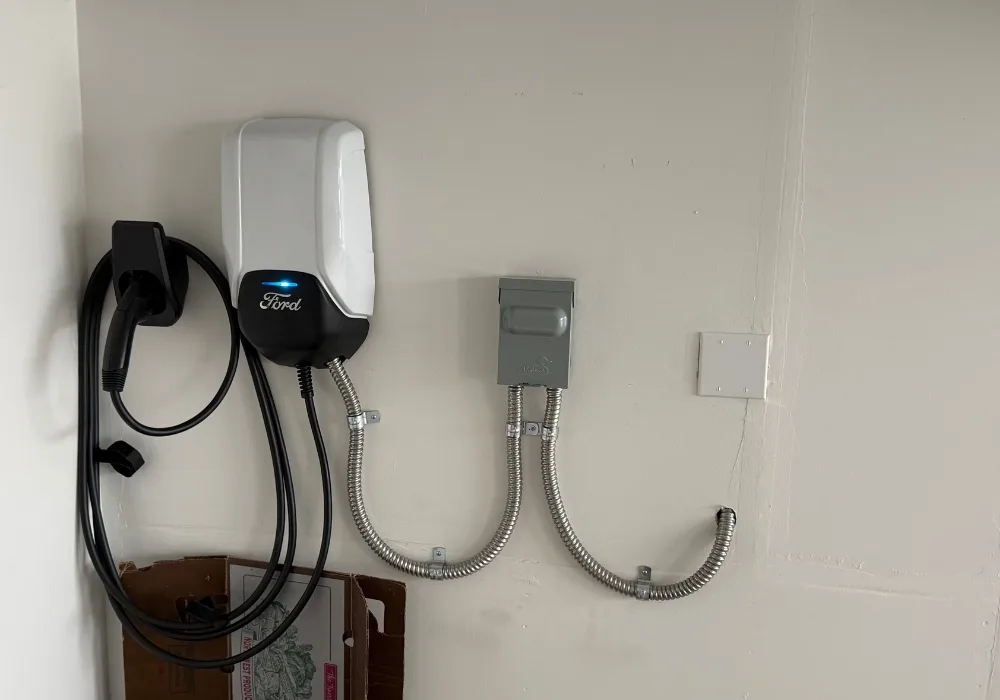
EV chargers. A Level 2 EV charger typically pulls 40 to 60 amps on a dedicated 240-volt circuit. On a 100-amp service panel already running a heat pump, dryer, and range, there’s often no room. The math forces an upgrade to 200 amps.
Heat pump conversions. The state’s push away from natural gas heating, plus PSE rebates and the federal Inflation Reduction Act incentives, has meant a lot of Everett-area homeowners converting from gas furnaces to electric heat pumps. A heat pump adds 30 to 50 amps of load to the panel. Combined with existing loads and a possible EV, this triggers a lot of upgrades.
ADU permits. Snohomish County has been actively encouraging accessory dwelling units. Adding an ADU with its own kitchen, laundry, and HVAC almost always requires either a panel upgrade to feed the ADU sub-panel or a separate service.
If any of these is in your near-term plans, do the panel upgrade first. Doing the panel after the EV charger is installed is more expensive and more disruptive.
What Size Panel Do You Actually Need?
Most single-family homes in Everett are on either a 100-amp or 200-amp service. Here’s the honest guidance:
- 100-amp service is generally adequate only for smaller homes with gas heat, gas water heater, gas range, no EV, and no plans to add one. Increasingly rare in modern lifestyles.
- 200-amp service is the standard for most new construction and modern remodels. Handles gas or electric appliances, one EV charger, a heat pump, and typical modern loads with headroom.
- 400-amp service is worth considering only for larger homes (over 4,000 square feet), homes planning two EV chargers plus a heat pump plus an ADU, or homes with electric everything and heavy usage.
For most Everett homeowners upgrading today, 200 amps is the right answer. Going bigger than you need adds cost without practical benefit.
What an Electrical Panel Upgrade in Everett Actually Involves
A residential panel upgrade is a one to two day job for most homes:
- Load calculation and site visit. We calculate your actual current and projected load using the National Electrical Code (NEC) method. This determines the correct panel size and confirms whether you also need a service upgrade from the utility.
- Permit. Electrical panel upgrades in Everett and all surrounding Snohomish County jurisdictions require a permit. We pull it. We coordinate with L&I for the inspection.
- Coordinate with Snohomish County PUD. Most panel upgrades also require an upgrade to the service drop, meter base, or both. We schedule the utility disconnect and reconnect.
- Remove the old panel. Power is off to the house for most of the day of the swap.
- Install the new panel and meter base. New breakers, labeled clearly. Any existing circuits that are undersized or non-code get corrected while the panel is open.
- Inspection. L&I inspector signs off before the utility permanently reconnects.
- Walkthrough. We show you the new panel, the labeling, the main breaker, and any surge protection or smart panel features included.
Expect the house to be without power for four to eight hours on the day of the swap. We plan around your schedule and, for homes with medical equipment or remote work, we coordinate the timing carefully.
What It Costs (Real Ranges for Everett)
Honest ranges for the Everett and Snohomish County area:
- 100-amp to 200-amp upgrade, standard configuration: typically $2,800 to $4,500+ installed, including permit and utility coordination
- 200-amp panel replacement (same size, older panel out, new one in): typically $2,200 to $3,500+
- Panel upgrade plus service drop and meter base upgrade: typically $4,000 to $6,500+
- 200-amp panel with whole-home surge protection: add $250 to $500+
- Smart panel (Span, Leviton Load Center): add $2,500 to $5,000+ for the panel itself, plus install
Prices vary based on the difficulty of the panel location, the condition of the existing wiring, whether the service drop needs to be moved, and how much circuit relabeling and correction is included. Written estimates before work starts.
Frequently Asked Questions
How long does a panel upgrade take?
The physical swap is typically one full day. The full project timeline from load calculation through final inspection is usually one to two weeks, mostly waiting on permit approval and PUD scheduling.
Do I need a permit for a panel upgrade in Everett?
Yes. Panel upgrades require a Washington State L&I permit and a scheduled inspection. Any electrician who tells you otherwise is planning to skip inspection, which puts your insurance and your home resale at risk.
Will my power be off for the whole project?
Only on the day of the physical swap, usually four to eight hours. We coordinate the timing to minimize disruption.
Can I add an EV charger without upgrading my panel?
Sometimes, if the panel has capacity and an open slot. A licensed electrician needs to do a load calculation to confirm. Adding a 40-amp charger to a full panel without upgrading is a common cause of nuisance tripping and, in worst cases, fires.
Do PSE or Snohomish County PUD offer rebates?
Yes, particularly for heat pump conversions that are often paired with panel upgrades. Ask us during the site visit and we’ll flag the current programs.
Get a Load Calculation for Your Home
If you’re planning an EV, a heat pump, an ADU, or a remodel or if your existing panel is old, full, or acting up we’ll come out, do a real load calculation, and give you a straight answer on whether you need an upgrade.
Call In-House Electrical Services at (425) 760-3203 or request a visit through our contact page. Licensed, bonded, and insured in Washington. Serving Everett, Lake Stevens, Marysville, Mill Creek, Lynnwood, Mukilteo, and the surrounding Snohomish County area.