
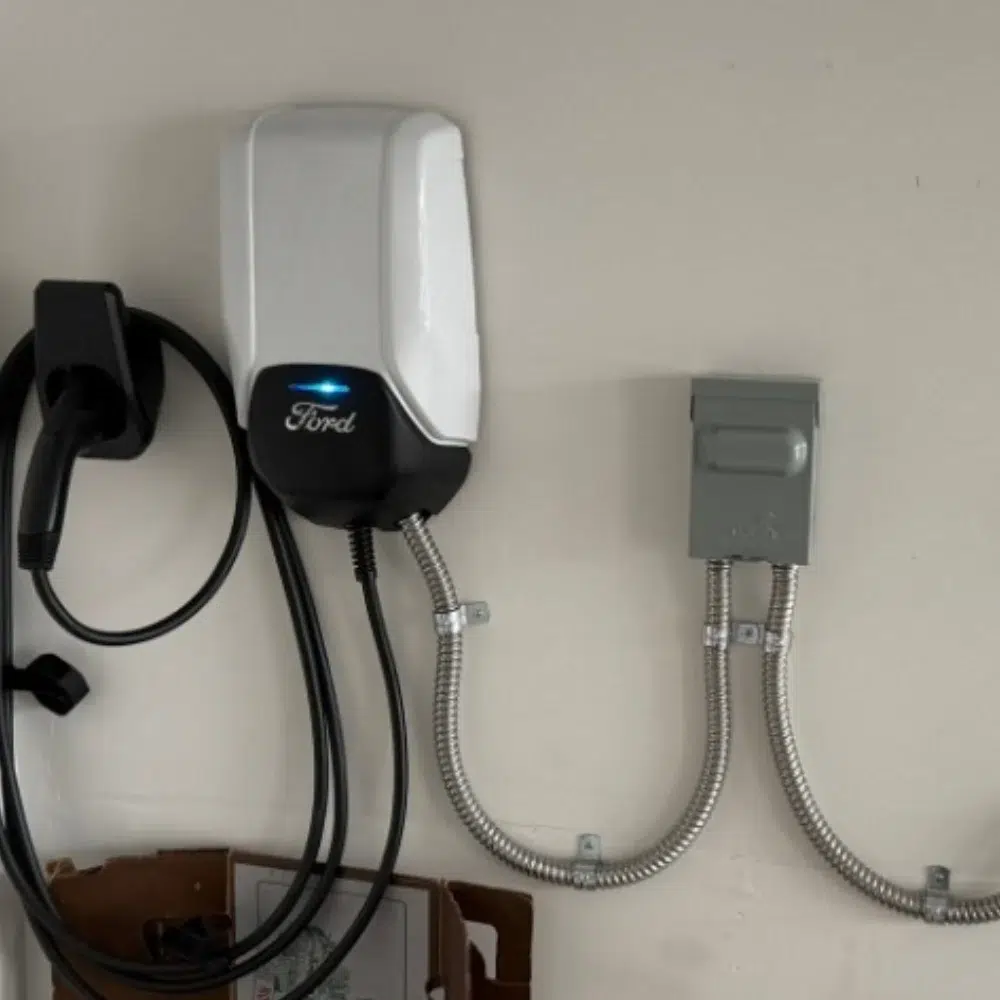
An Everett homeowner with a detached garage at the back of a long driveway decides it is finally time to install an EV charger. They assume it is a matter of running a wire from the house to the garage and mounting the charger on the wall, similar to what a neighbor with an attached garage did in an afternoon. Then the electrician arrives, walks the property, and explains that the distance between the main panel and the garage, along with the driveway sitting between the two, changes the entire scope of the project.
This situation comes up often for residential EV charger installation near Everett, where a meaningful share of the housing stock includes detached garages, long lots, and driveway layouts that were never designed with a 240-volt run in mind. This is a layout and site-access question as much as an electrical one, and it often gets less attention than panel capacity or permit requirements when homeowners first start researching EV charger installation.
Why “Just Run a Wire” Gets Complicated Fast
For an attached garage, running a circuit from the main panel is usually a matter of routing wire through the wall, attic, or a short exterior run. For a detached garage, the electrician has to get power across open ground, which almost always means either trenching for underground conduit or running the wire overhead.
Both options involve real construction work beyond simply pulling wire. Trenching disturbs whatever is above it, which in Everett often means a driveway, a section of lawn, or established landscaping. Overhead runs require a support structure at both ends and have their own clearance requirements. Neither option is a quick add-on to a standard installation, which is why quotes for detached garage EV charger installs tend to look significantly different from a straightforward attached garage job.
Overhead vs. Underground: What Determines the Choice
There is no default answer here. The right choice depends on the specific property.
Underground conduit is generally the more common choice for modern installations because it keeps the wiring out of view and avoids the clearance and support requirements of an overhead run. The tradeoff is the disturbance caused during trenching, especially if the shortest path crosses a paved driveway, which then needs to be cut and repaired.
Overhead runs can make sense when trenching would cross a driveway or hardscaping that the homeowner does not want disturbed, or when the distance and terrain make underground conduit impractical. The tradeoff is a visible wire run and support requirements at both structures.
An electrician should walk the actual property and map out both options with real cost implications before the homeowner decides, rather than defaulting to whichever method is easier to quote quickly.
When a Sub-Panel at the Garage Makes More Sense
Before any new circuit gets run, a licensed electrician should first check whether the garage already has an existing electrical supply from a previous installation, and if so, verify the condition of that feeder or branch circuit, its load capacity, the disconnect, and the grounding and bonding. Some jurisdictions also restrict how many separate electrical supplies a detached structure can have, so this needs to be confirmed before assuming a new circuit is the right move, not after the work has started.
For a single Level 2 charger and nothing else, running one dedicated circuit from the main panel to the garage is often sufficient, provided that check does not turn up a reason to do otherwise. But if the garage is also used as a workshop, has its own lighting needs, or the homeowner anticipates adding more electrical demand out there over time, installing a sub-panel at the garage instead of a single circuit can be the more practical long-term choice.
A sub-panel means one larger feeder runs from the main panel to the garage, and then individual circuits, including the EV charger circuit, branch off from the sub-panel itself. This adds cost upfront but avoids the need for another long run back to the house if the homeowner wants to add garage lighting, outlets, or another 240-volt circuit later.
How Distance Affects Voltage Drop and Wire Gauge
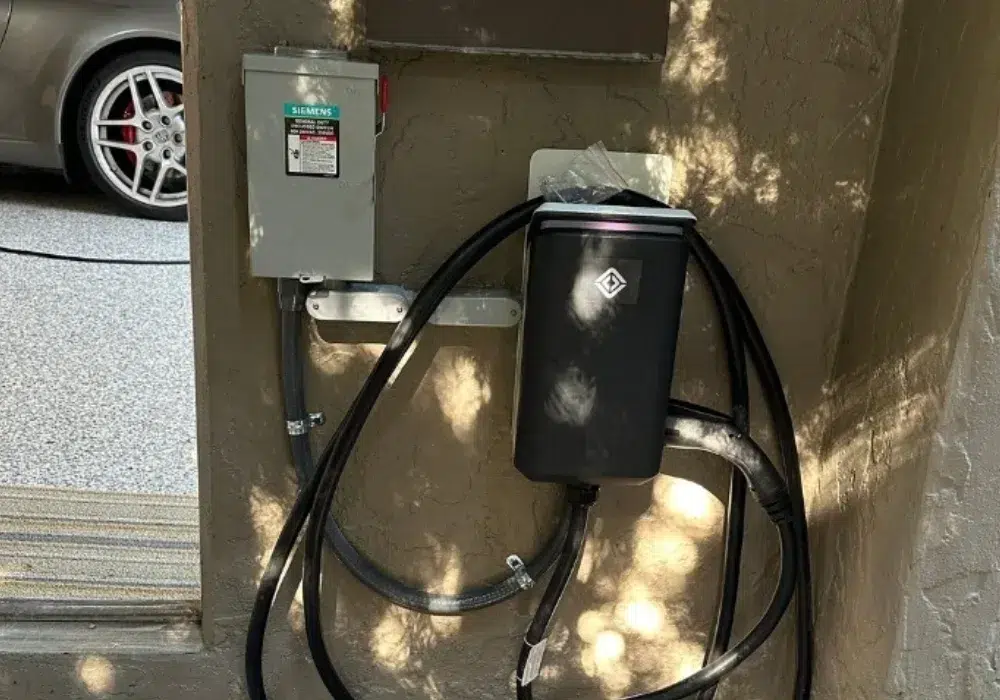
The farther electricity has to travel through a wire, the more voltage it loses along the way, an effect known as voltage drop. For a short run, this is negligible. For a longer run to a detached garage, especially on a property with significant distance between the house and the garage, voltage drop becomes a real design consideration.
To keep voltage drop within an acceptable range over a longer distance, the wire gauge often needs to increase, meaning thicker, more expensive wire than what would be used for a shorter run. This is a legitimate cost driver that has nothing to do with the charger itself and everything to do with the physical distance the circuit has to cover. A qualified electrician calculates this based on the specific distance and expected load rather than guessing at wire size.
Permit and Inspection Implications for Detached Structures
Running new electrical service to a detached structure typically requires an electrical permit. The actual permitting authority depends on the property’s location. In Everett, that is the City of Everett’s own electrical permitting process rather than a single statewide filing, and the inspection process may involve additional scrutiny compared to work confined entirely within the main house, particularly for underground conduit depth and any sub-panel installation. This is not a reason to avoid the project, but it does mean the timeline for a detached garage EV install usually runs longer than an attached garage job, and homeowners should plan accordingly rather than expecting a same-week turnaround.
Frequently Asked Questions
Can this be done without trenching my whole driveway?
Often, yes. Directional boring or a narrower trench along the driveway edge can sometimes avoid cutting across the full width of pavement, depending on the layout. An electrician needs to assess the specific property to determine what is possible.
How much more does a detached garage installation typically cost compared to an attached garage?
It varies significantly based on distance, whether trenching or an overhead run is used, and whether a sub-panel is needed. Rather than a typical dollar difference, the more useful way to think about it is the specific cost drivers for your property: run length, trenching versus overhead, and panel versus sub-panel. An electrician can only give you an accurate number after walking the site.
How long does a detached garage EV charger installation take from start to finish?
Timeline depends on permitting, the scope of trenching or overhead work, and inspection scheduling, all of which vary by project and jurisdiction. It will generally take longer than a same-day attached garage install. Your electrician can give you a project-specific timeline once the scope is set.
Do I need a sub-panel if I only want one charger and nothing else in the garage?
Not necessarily. A single dedicated circuit is often sufficient if the garage has no other current or anticipated electrical needs. A sub-panel becomes more worthwhile when other loads are expected.
Will the driveway be repaired after trenching?
Restoration after trenching should be addressed in the written scope of work before the project starts, including who handles it, what is included, and whether it is a separate line-item cost. This is worth confirming upfront rather than assuming it is automatically included.
Get a Real Site Assessment, Not a Generic Quote
Detached garages and long driveways are common enough around Everett that a proper EV charger quote should never assume a simple, short run. In-House Electrical Services will walk your property, map out the realistic path options, and give you a quote based on your actual layout.
Call In-House Electrical Services at (425) 760-3203 to schedule a site visit. Serving Everett and the surrounding Snohomish County area.