
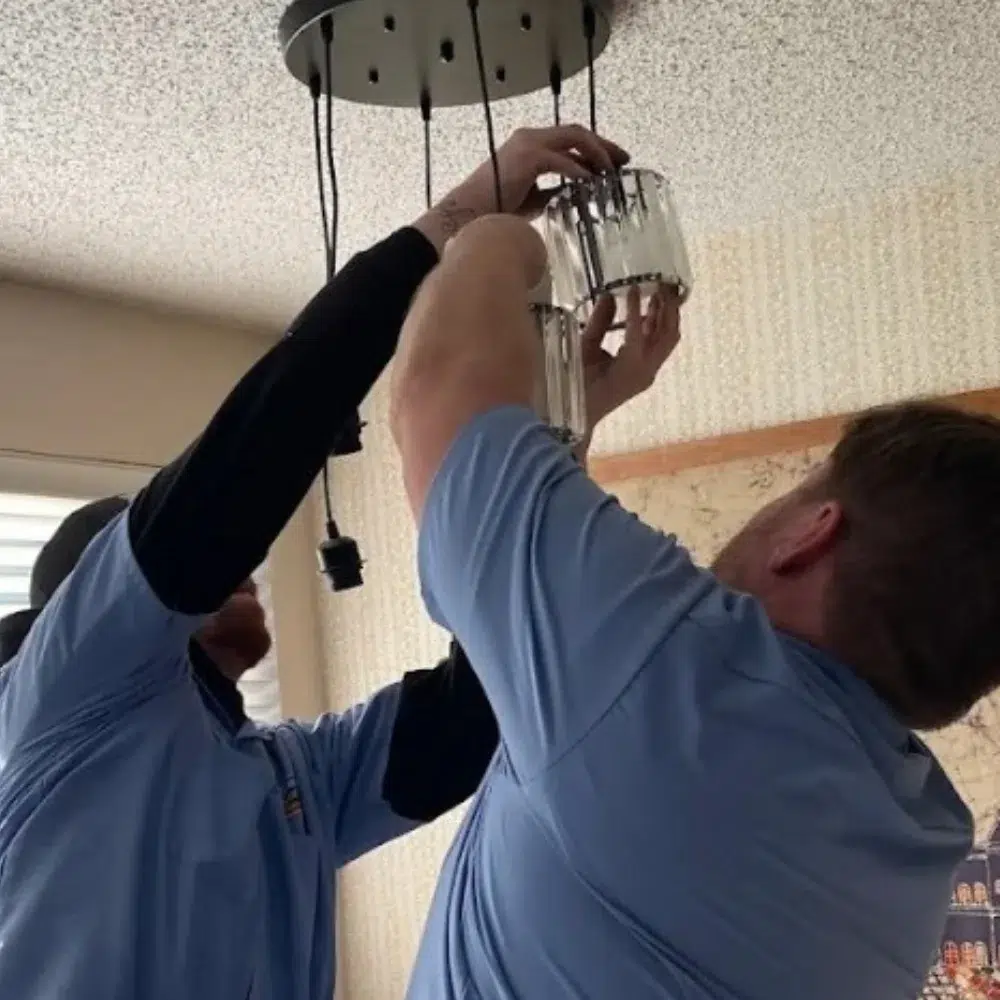
Two neighbors on the same Everett street, same builder, same square footage, decide within a month of each other that they want their homes rewired for better lighting. Both call around for quotes. One comes back around a few thousand dollars. The other comes back noticeably higher. Same house plan, same city, same general scope of work. So what happened?
This is one of the more common questions we hear when homeowners start comparing bids from lighting specialists in Everett. The fixtures on the shelf at the store cost the same no matter who installs them. Fixture type, grade, and quantity still affect the price, but a lot of the gap also comes down to what is happening behind the wall, in the attic, and in the panel, which does not show up until an electrician actually opens things up.
Why “Cost Per Fixture” Quotes Are Misleading
A lot of homeowners start their search by asking for a price per fixture, the same way you would price out flooring per square foot. Lighting does not work that way. A recessed can in an open living room ceiling with easy attic access above it might take twenty minutes to install. The identical can in a vaulted ceiling with no attic access above it, or in a room with blown-in insulation packed tight against the joists, can take several times longer.
When a quote comes back higher than expected, the fixture count is rarely the reason. The labor required to get power to that fixture is almost always the real driver.
Existing Circuit Capacity vs. New Dedicated Circuits
Older Everett homes were often wired with a handful of circuits doing a lot of work. Adding new lighting to an existing circuit that already has headroom is a straightforward job. Adding the same lighting to a circuit that is already near its limit means running a new dedicated circuit back to the panel, which involves more wire, more labor, and sometimes an available breaker slot that does not exist yet.
This is one of the most common reasons two “identical” quotes can differ. One electrician looked at the panel and confirmed there was room to work with. The other found a panel that was already full, which changes the scope of the job before a single fixture goes on the wall.
Fixture-Grade vs. Big-Box Fixtures
Not all fixtures are wired the same way internally, and not all of them are rated for the same installation conditions. Fixtures need to be listed and rated for the specific location they are going into, and the installer has to follow the manufacturer’s clearance instructions exactly, especially around insulation. An IC-rated (insulation contact) fixture is built to sit safely in direct contact with insulation. A fixture that is not IC-rated can sometimes still be used in that location, but only if the required clearance from insulation is maintained, which takes more careful, more time-consuming work to do correctly and stay code compliant. This is not a simple cheaper-but-more-labor tradeoff a homeowner can pick between. It is a code requirement tied to the specific fixture and the specific location.
Homeowners sometimes bring their own fixtures to save money, which is fine, but the labor estimate should reflect the specific fixture, not a generic one. A specialist who quotes before seeing the actual fixture is guessing.
Attic and Crawlspace Access as a Hidden Cost Driver
Everett has a wide range of home ages and roof designs, and attic access varies a lot more than most homeowners expect. A full-height attic with a pull-down ladder is easy to work in. A low-clearance attic, a finished attic with limited access panels, or a home with no attic at all above certain rooms, changes how the electrician has to route wire, and how long that takes.
Crawlspace conditions matter just as much for lighting fed from below, particularly in older homes where insulation, moisture, or previous unpermitted work can slow the job down considerably.
Permit Requirements for Lighting Work in Everett
New circuits, new fixture locations that involve running wire through finished walls or ceilings, and any work tied to a panel typically require an electrical permit and inspection. In Everett, that permit goes through the City of Everett’s own electrical permitting process, not a single generic statewide filing, and it applies to new wiring and new fixture locations specifically. A straightforward like-for-like fixture replacement on existing wiring is generally treated differently than adding new circuits or new locations, so it is worth confirming which category your project falls into. A specialist who pulls the required permit is building that cost and that timeline into the quote. A bid that skips this step will look cheaper on paper, but it puts the homeowner at risk during a future home sale or insurance claim if the work was never inspected.
This is worth asking about directly when comparing bids. If one quote is dramatically lower and does not mention a permit, ask why.
What a Legitimate Lighting Specialist Includes in a Quote
A complete quote from a lighting specialist typically accounts for:
- A load calculation on the existing circuit or panel, not an assumption that there is room
- The specific fixtures being installed, not a generic per-unit price
- Attic, crawlspace, or wall access conditions specific to that home
- Permit and inspection costs where the scope requires it
- Any panel or wiring corrections found once the work is opened up
Two quotes that look similar on paper can diverge once the electrician is actually inside the walls. Sometimes that is because a condition was genuinely concealed, something no walkthrough could have caught without opening the wall. Other times it is because the original estimate skipped a step, such as a load calculation, that would have caught the issue before the quote was ever given. Either way, any change to the original scope should be explained and approved by the homeowner before work continues, not added to the final bill afterward.
Frequently Asked Questions
Why did my quote go up once the electrician started the work?
This usually happens when the panel or existing wiring did not match what was assumed during the initial walkthrough, often because the issue was not visible until a wall or ceiling was opened. A specialist should explain exactly what changed and why before continuing.
Does bringing my own fixtures save money?
Sometimes, but not always. It depends on whether the fixture is rated correctly for its location and how much labor it takes to install compared to a fixture designed for that specific application.
How do I know if my panel has room for new lighting circuits?
A licensed electrician needs to do a load calculation. This is not something you can determine by looking at the panel yourself, since open breaker slots do not necessarily mean there is available capacity.
Is a permit really required for adding lighting?
For new circuits or significant rewiring, yes, under Washington State L&I requirements. Simple fixture swaps on existing circuits with no new wiring typically do not require a separate permit, but a specialist should confirm this for your specific project.
Why is attic access such a big factor in the price?
Because it determines how long it physically takes to route wire safely to each fixture location. A hard-to-access attic or crawlspace can add significant time to an otherwise simple job.
Get a Quote That Actually Reflects Your Home
If you are comparing lighting quotes in Everett and the numbers do not match up, the difference is almost always in what each electrician found, or did not check, before pricing the job. In-House Electrical Services will do a real load calculation and a real walkthrough before giving you a number, so the quote you get reflects your home, not a generic estimate.
Call In-House Electrical Services at (425) 760-3203 to schedule a walkthrough. Serving Everett and the surrounding Snohomish County area.