
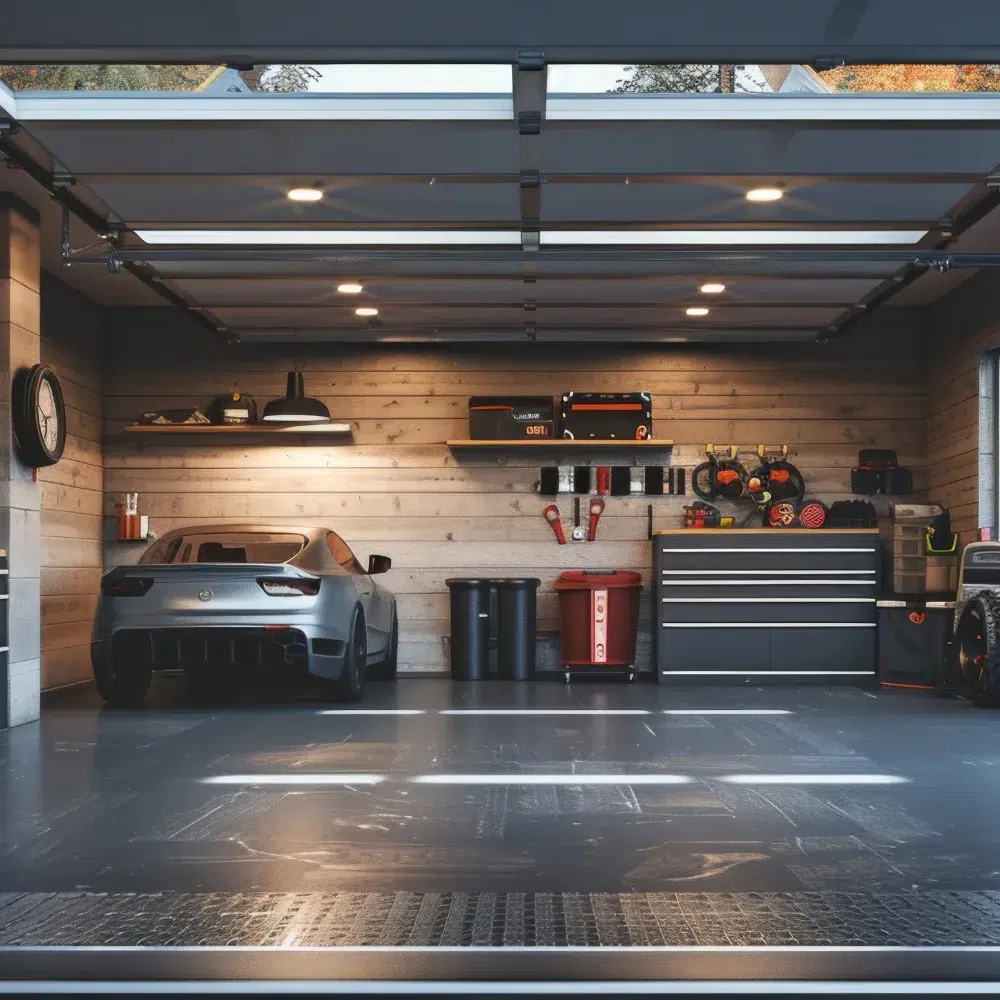
Wall-to-wall garage storage can create an unexpected lighting problem. The ceiling fixtures may produce plenty of light, yet tall shelves, deep storage racks, cabinets, and stacked bins can prevent that light from reaching the workbench, lower shelves, walkways, and areas beside parked vehicles.
Installing a brighter bulb may increase the total light output without fixing these shadows. In many storage-heavy garages, fixture placement and light distribution matter just as much as brightness.
For Marysville homeowners considering a lighting upgrade, the goal should be to illuminate the areas they actually use. A thoughtful plan for garage lighting in Marysville can combine overhead, side, and task lighting to work around existing storage rather than allowing shelves to dictate where dark spots remain.
Why Does Wall-to-Wall Garage Storage Create Dark Spots?
Most garages start with relatively simple overhead lighting. That approach may provide acceptable coverage while the garage remains open. Once tall shelving, cabinets, tools, and storage bins occupy the walls, however, the way light moves through the space changes.
An overhead fixture primarily illuminates surfaces within its effective light path. A tall cabinet or storage rack can interrupt that path before the light reaches lower areas.
Several factors can contribute to the problem:
- Tall shelves intercept overhead light. The upper portions may look bright while lower shelves and the floor remain difficult to see.
- Deep shelves create larger shadows. A shallow shelf and a deep storage rack do not affect light distribution in the same way.
- Storage bins extend the obstruction. Large containers, equipment, and tools can project beyond the shelf edge and block additional light.
- Cabinet doors change the lighting conditions. An area may look sufficiently illuminated until a cabinet door opens and interrupts the light.
- Your own body can create shadows. When you stand between a ceiling fixture and a workbench, you may block the very light you need for the task.
- One central fixture creates uneven coverage. Corners, wall sections, pathways, and work zones may remain dim even when the center of the garage looks bright.
These problems become more noticeable when a garage serves as more than a parking area. Workshops, storage zones, hobby areas, tool stations, and home-improvement workspaces all create different lighting demands.
How to Light a Garage With Wall-to-Wall Storage
You usually do not need to sacrifice storage space to improve visibility. Instead, the lighting layout should account for the physical barriers created by shelving and cabinets.
A layered approach can illuminate the garage from multiple directions rather than expecting one ceiling fixture to reach every surface.
1. Use Multiple Overhead LED Fixtures for General Lighting
Overhead LED garage lighting can provide the foundation for the entire lighting plan.
In a storage-heavy garage, however, one extremely bright fixture in the center may be less effective than several appropriately positioned fixtures. Multiple light sources can distribute illumination across a larger area and reduce the severity of shadows.
Fixture placement should account for:
- Garage dimensions
- Ceiling height
- Shelf height and depth
- Parking locations
- Workbench placement
- Garage doors and tracks
- Existing wiring
- Frequently used pathways
The objective is not to install as many lights as possible. It is to position general lighting where cabinets and storage racks will not immediately block its useful coverage.
2. Add Side Lighting Where Shelves Block Ceiling Light
Tall storage systems create a weakness in overhead-only lighting because the illumination comes primarily from above.
Appropriately positioned wall-mounted or supplemental fixtures can direct light toward areas that ceiling fixtures struggle to reach. This approach can be particularly useful around frequently accessed storage, tool walls, work zones, and pathways.
Side lighting can also improve visibility across vertical surfaces. That matters when you need to read labels, identify tools, or locate small items stored on shelves.
Fixture placement remains important. Poorly positioned side lighting can introduce glare without meaningfully improving visibility.
3. Give the Workbench Its Own Task Lighting
A garage workbench should not depend entirely on the room’s general lighting.
Imagine standing at a workbench with a ceiling fixture behind you. The garage itself may appear bright, but your body can cast a shadow directly across the project in front of you.
Dedicated task lighting addresses this problem by illuminating the work surface from a more useful position.
Focused workbench lighting can help when performing:
- Equipment repairs
- Assembly
- Woodworking
- Measurements
- Tool maintenance
- Detailed hobby projects
- Home-improvement tasks
When practical, controlling task lighting separately from general garage lighting also gives you greater flexibility. You can illuminate the workbench when needed without operating every fixture in the garage.
4. Consider Targeted or Under-Shelf Lighting
Deep shelving can create shadows that overhead and wall-mounted fixtures still cannot fully eliminate.
Targeted lighting may provide useful illumination underneath shelves, around cabinets, or within specific storage areas.
Before adding permanent under-shelf lighting, consider where the fixture and wiring will sit. Garage storage areas experience dust, movement, tools, bins, and occasional impacts. Electrical components should remain appropriately protected and installed for their intended application.
A permanent installation may also require changes to wiring, outlets, switches, or lighting controls depending on the existing electrical setup.
Why Even Lighting Matters More Than Simply Adding Brighter Bulbs
Brightness does not tell you where the light actually reaches.
A powerful fixture can make the center of a garage extremely bright while leaving the bottom of a storage rack difficult to see. Increasing output further may make the bright areas uncomfortable without correcting the underlying shadows.
Instead, think of the garage as several lighting zones.
General lighting supports movement, parking, and overall visibility.
Storage lighting helps illuminate shelves, cabinets, tools, and wall areas.
Task lighting provides focused illumination for workbenches and project areas.
Pathway lighting helps maintain visibility around vehicles, doors, storage racks, and entrances.
This layered approach focuses illumination where people actually need it instead of chasing higher light output from a single source.
Where Should Lights Go When Garage Shelves Reach Almost to the Ceiling?
Tall shelving requires careful fixture placement because the space between the top shelf and ceiling may be limited.
Placing a ceiling fixture directly above deep shelving may illuminate the top of the storage system while doing little for its lower levels. Moving the light source toward the aisle can sometimes create a more useful angle toward the shelf fronts and surrounding floor.
The same principle applies to cabinets.
Consider what happens when cabinet doors are open. A fixture that works perfectly while the doors remain closed may become partially blocked when you actually access the cabinet.
Also consider the location of parked vehicles. Large vehicles can affect how light reaches lower walls and floor areas, particularly in narrower garages.
Rather than selecting fixture positions based only on an empty ceiling, evaluate the complete three-dimensional space:
- Where do the shelves end?
- How far do they project from the wall?
- Where do people stand while accessing them?
- Where do cabinet doors swing?
- Where will vehicles sit?
- Which aisles receive the most foot traffic?
- Which surfaces require detailed visibility?
Answering those questions can produce a more functional layout than simply spacing fixtures evenly across the ceiling.
What If You Are Planning New Garage Shelving?
The ideal time to think about lighting may be before new wall-to-wall storage goes in.
Homeowners sometimes improve the lighting first and install cabinets or tall racks later. A fixture that once provided excellent coverage can become much less useful after a new storage system interrupts its light path.
If you are planning both projects, consider the lighting and storage layouts together.
Identify:
- Final shelf height
- Shelf depth
- Cabinet locations
- Workbench position
- Tool-storage areas
- Vehicle clearance
- Walking paths
- Electrical outlet locations
- Fixture locations
- Switch and lighting-control locations
Planning these elements together can reduce the chance that expensive new storage immediately creates another lighting problem.
It can also help determine whether wiring changes make sense before cabinets or shelving make parts of the wall more difficult to access.
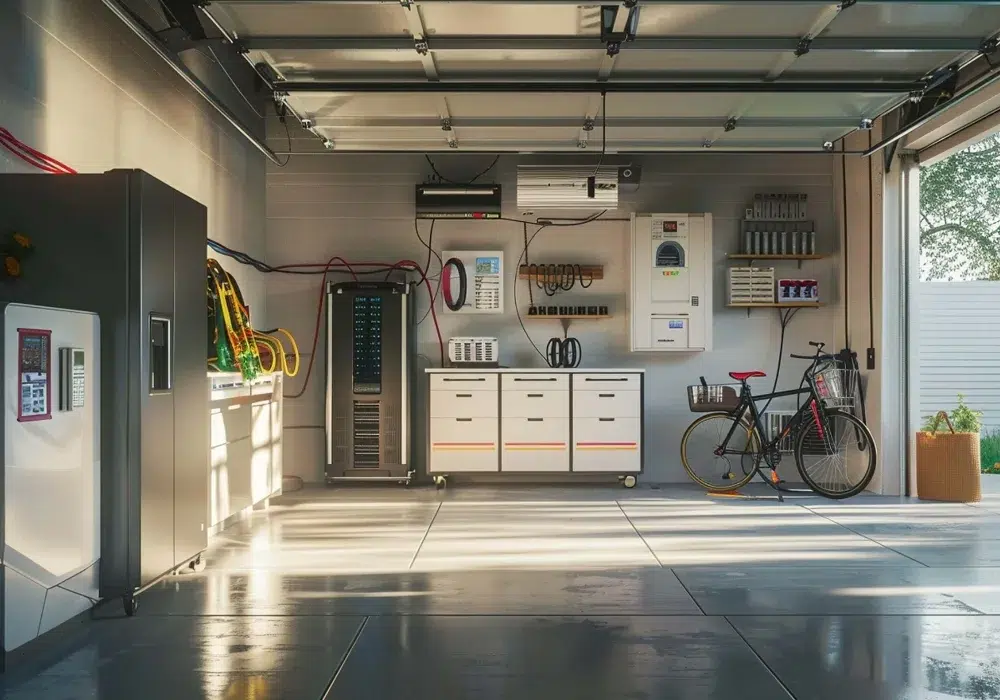
A Practical Test Before Changing Your Garage Lighting
You can learn a lot about the current lighting layout by evaluating the garage after dark, when daylight from windows and open doors does not hide problem areas.
Walk through the garage with the existing lights operating normally.
Check the Storage From the Garage Entrance
Look toward each wall and identify obvious dark sections. Pay particular attention to the lower portions of tall shelving.
Open Cabinets and Storage Areas
Do not evaluate the garage with everything closed. Open cabinet doors and access frequently used storage. Check whether the lighting changes significantly.
Stand Where You Actually Work
Move to the workbench and assume your normal working position. If your body creates a shadow across the work surface, brighter general lighting may not address the problem as effectively as correctly positioned task lighting.
Walk Around the Parked Vehicle
Check the areas beside the doors, near the trunk or hatch, and between the vehicle and storage racks. These narrow areas often expose weaknesses in the lighting layout.
Look at the Lower Shelves
Upper shelving may receive enough illumination while lower shelves remain dark. This can indicate that the problem involves the direction of light rather than insufficient overall brightness.
Check for Glare
Do not evaluate only dark areas. Look for fixtures that create uncomfortable glare at normal eye level, particularly near workbenches.
A successful lighting upgrade should improve visibility without creating another problem.
Which Garage Lighting Options Work Well With Storage?
Different fixtures solve different problems, so there is no single best option for every garage.
LED shop lights can provide broad general illumination across garages, workshops, and storage areas.
Linear LED fixtures can distribute light across longer ceiling sections rather than concentrating illumination in one location.
Wall-mounted lighting can supplement overhead fixtures where tall shelves create persistent shadows.
Task lights can provide focused illumination at workbenches and project stations.
Motion-activated lighting can add convenience when entering an attached garage while carrying groceries, tools, or other items.
Smart lighting controls may allow scheduling, motion control, or convenient operation of different lighting zones.
The right combination depends on how the garage is arranged and used.
When Should You Call a Professional for Garage Lighting?
Some homeowners can improve visibility with simple fixture changes. More extensive upgrades may involve permanent electrical work.
Professional evaluation becomes particularly useful when the project requires:
- New hardwired lighting
- Additional fixture locations
- New or relocated switches
- Separate lighting zones
- New wiring
- Circuit changes
- Integration with existing electrical systems
- Lighting around fixed cabinets or permanent storage
- Evaluation of existing electrical capacity
A professional electrician can evaluate both the electrical system and the physical layout of the garage before determining where additional lighting would provide a practical benefit.
That matters in storage-heavy garages because adding fixtures wherever ceiling space remains available does not necessarily solve the underlying shadow problem.
When Is It Time to Upgrade Your Garage Lighting?
A garage lighting upgrade may make sense when you regularly notice:
- Dark areas underneath or behind shelving
- Shadows across the workbench
- Difficulty reading labels on stored items
- Poor visibility around a parked vehicle
- Dim pathways between storage and vehicles
- Flickering or outdated fixtures
- A garage that still feels unevenly lit after installing brighter bulbs
- A need for separate workbench lighting
- A desire for motion or smart controls
- Plans to add new cabinets or wall-to-wall storage
If increasing bulb brightness has made bright areas brighter without improving the dark areas, fixture placement may be the more important problem to address.
Frequently Asked Questions
1. Can I Improve Garage Lighting Without Removing My Shelves?
Yes. Existing storage can often remain in place while a lighting plan uses overhead, side, and task lighting to address shadows. Shelf height, depth, placement, and nearby work areas should influence fixture positioning.
2. Can Tall Garage Shelves Block New LED Lights Too?
Yes. Switching to LEDs does not automatically eliminate shadows. Tall or deep shelving can still interrupt the light path if new fixtures are positioned poorly. Fixture location and light distribution remain important regardless of the lighting technology.
3. Are LED Lights Suitable for an Unheated Marysville Garage?
LED fixtures are commonly used in garages and can perform well in cooler conditions. Homeowners should still select fixtures with specifications appropriate for the installation environment and existing electrical system.
4. How Can I Light a Garage Workbench Without Creating Shadows?
Position task lighting so your body, cabinets, and nearby shelving do not sit between the light source and the work surface. Dedicated workbench lighting can provide more useful visibility than relying solely on ceiling fixtures.
5. Do Garage Lighting Upgrades Require Electrical Work?
It depends on the project. Some changes may work with existing wiring and fixture locations, while larger upgrades can require new wiring, switches, circuits, or hardwired fixtures. An electrician can evaluate what the intended layout requires.
Make Your Garage Storage Easier to See and Use
Wall-to-wall shelving should improve organization, not leave you searching through dark shelves every time you need a tool or storage bin.
If brighter bulbs have not solved the problem, the issue may be where the light comes from rather than how much light the fixture produces. Combining well-positioned overhead lighting with targeted side and task illumination can reduce shadows and make storage, work areas, pathways, and parking spaces easier to use.
For homeowners who need garage lighting in Marysville, In-House Electrical Services can evaluate the existing fixtures, electrical setup, shelving layout, and the way you use your garage before recommending a practical lighting solution.
Instead of adding another brighter bulb to a placement problem, create a lighting layout designed around the garage you actually have.
Call In-House Electrical Services Services at +1 4257603203 to discuss your Marysville garage lighting project and schedule an evaluation.