
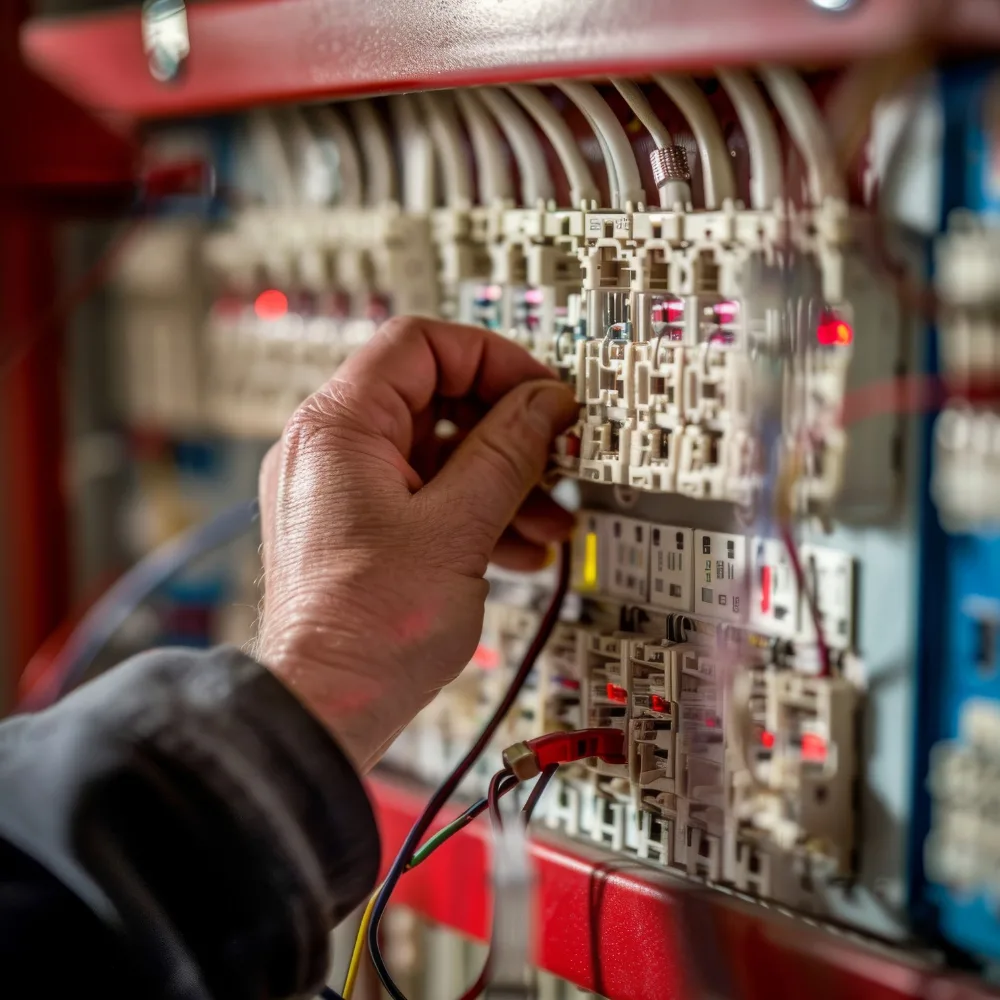
If you live in Lynnwood, you probably know the pattern. The first steady rain of fall settles in, and suddenly the patio outlets are dead, the garage freezer is warm, or a breaker trips overnight and won’t stay reset. It’s easy to blame the weather and wait for a dry week. But a circuit that quits whenever it rains is telling you water is reaching something it shouldn’t. Here’s what usually causes it, what you can safely check on your own, and when it’s time to call for circuit repair in Lynnwood.
Why Rain and Household Circuits Don’t Mix
Water gives electricity a path it was never meant to take. Your home has two main layers of protection against that.
A GFCI (ground fault circuit interrupter) compares the current leaving on one wire with the current coming back on the other. If some of it leaks out through a different path, like moisture inside an outdoor box, the GFCI shuts the circuit off almost instantly. When a GFCI trips in the rain, it’s usually doing its job. The device isn’t the problem. It’s pointing at one.
A standard breaker trips for a different reason: too much current or a short circuit. If moisture creates a path between conductors, the breaker can trip, and sometimes you’ll find scorching inside the box.
Lynnwood’s weather makes this worse than a single storm would. Our wet season is long and steady. Months of drizzle and damp air work their way into covers, gaskets and fixtures that might shrug off one heavy downpour. Many local homes also have exterior outlets and lights that have been through decades of wet winters, and the seals don’t last forever.
The Usual Suspects Behind Rain-Related Circuit Trips
Outdoor outlets with worn or outdated covers
Older flip-style covers only protect the outlet when nothing is plugged in. Current code calls for “in-use” covers on outlets in wet locations, which stay weatherproof even with a cord attached. Cracked gaskets, missing covers and outlets that face upward all let water collect where the contacts are.
Exterior light fixtures
Porch lights, motion floodlights and landscape lighting all rely on gaskets and sealant that dry out and crack over time. Once water gets behind a fixture, it can run down the wire and into the box behind it.
Wiring to sheds, hot tubs and yard lights
Circuits that run underground or along the outside of the house are exposed to moisture all year. Damaged conduit, older cable that was never meant for burial, and rodent damage are common findings on these runs.
Holiday lights and extension cords
Decorations go up during some of the wettest weeks of the year. Plug connections lying in wet grass or gutters are one of the most common causes of seasonal GFCI trips.
Water getting inside the house
Not every rain-related trip starts outdoors. A roof leak, a poorly sealed vent, or moisture in a crawlspace can reach junction boxes, ceiling fixtures or recessed lights. If indoor lights flicker or trip during heavy rain, look for signs of a leak above them.
What You Can Safely Check Before You Call
A few simple steps can narrow things down and save time once an electrician arrives:
- Note which outlets and lights are dead, and whether it happens only during or right after rain.
- Find the GFCI that protects the circuit. It might be in the garage, a bathroom, or on another outdoor outlet, not the one that stopped working. Press reset once.
- Unplug everything outdoors on that circuit, then reset again. If it holds, a plugged-in cord or device may be the source.
- Look at outdoor covers and fixtures without touching the inside of them. Cracks, missing covers and standing water are all worth noting.
Stop and call a professional if the breaker trips again immediately, you notice a burning smell, see scorch marks, hear buzzing, feel a warm cover plate, or see water inside a box. Don’t open electrical boxes, and don’t keep resetting a breaker that won’t hold. And never swap a GFCI for a standard outlet just to stop the tripping. That removes the protection that’s keeping the circuit safe.
What Professional Circuit Repair in Lynnwood Looks Like
A licensed electrician starts by tracing the circuit and finding every device on it. That matters, because rain-related faults often hide somewhere unexpected. A GFCI in the garage can protect outlets on the deck, the side yard and the front porch, and the moisture might be in any of them.
From there, the electrician tests connections and wiring to find where the leakage or short is happening. Common fixes include:
- Replacing corroded outlets with weather-resistant GFCI devices
- Installing in-use covers on outdoor outlets
- Resealing or replacing exterior fixtures
- Repairing or replacing damaged underground or exterior runs
- Correcting boxes that were mounted in a way that lets water in
Some of this work requires a permit. The City of Lynnwood issues electrical permits and conducts inspections for work inside city limits, and applications are submitted by a licensed contractor. A good electrician will tell you up front whether your repair needs one.
At In-House Electrical Services, every job ends with testing to confirm the circuit is working safely before we leave.
Why “It Only Happens When It Rains” Shouldn’t Wait
An intermittent problem is easy to put off, but moisture damage tends to build. Each wet cycle can corrode contacts a little more and loosen connections. Loose connections create heat, and heat breaks down insulation over time.
There’s also the question of what isn’t tripping. A GFCI that shuts off in the rain is protecting you. A circuit without GFCI protection may not trip at all, which can leave a wet outdoor surface energized. If your home has older exterior outlets with no GFCI protection anywhere on the circuit, that’s worth fixing whether or not you’ve noticed a problem.
And practically speaking, a freezer or other appliance on a tripped circuit can sit without power for hours before anyone notices.
Preventing Wet-Weather Trips Next Season
Late summer, before the rain returns, is the best time to get ahead of this:
- Upgrade outdoor outlets to weather-resistant GFCIs with in-use covers.
- Have exterior fixtures checked and resealed where gaskets have failed.
- Use outdoor-rated cords for seasonal lighting and keep connections off the ground.
- Give hot tubs, outdoor freezers and other larger loads their own dedicated circuit so one wet outlet doesn’t take them down.
Frequently Asked Questions
Why does my GFCI only trip when it rains?
Moisture is reaching something on that circuit, usually an outdoor outlet, fixture or cord connection. The GFCI senses current leaking through the water and shuts off. Once things dry out, it resets, which is why the problem seems to come and go.
Is it safe to keep resetting a breaker that trips in wet weather?
Resetting once is fine. If it trips again right away, or keeps tripping every time it rains, leave it off and have the circuit inspected. Repeated resets can push power into a fault that’s getting worse.
Can I replace a GFCI outlet that keeps tripping with a regular outlet?
No. The GFCI is tripping because it’s detecting a real problem. Replacing it with a standard outlet removes that protection and leaves the fault in place.
Do I need a permit for circuit repair in Lynnwood?
It depends on the work. The City of Lynnwood requires permits for most electrical work within city limits, and a licensed contractor applies for them. Your electrician should tell you before starting whether a permit is needed.
How fast can someone come out?
Same-day appointments are often available, depending on the schedule. If you smell burning, see sparks, or have a circuit that won’t stay off, In-House Electrical Services offers 24/7 emergency service.
Get Your Circuits Back Before the Next Storm
In-House Electrical Services has served Snohomish County homeowners since 2009 from our shop at 1912 Everett Ave in Everett, a short drive up I-5 from Lynnwood. Our licensed, insured electricians handle circuit repair in Lynnwood, from tracking down rain-related trips to replacing damaged outdoor wiring. Call 425-760-3203 or schedule online, and we’ll find the problem and fix it right.