
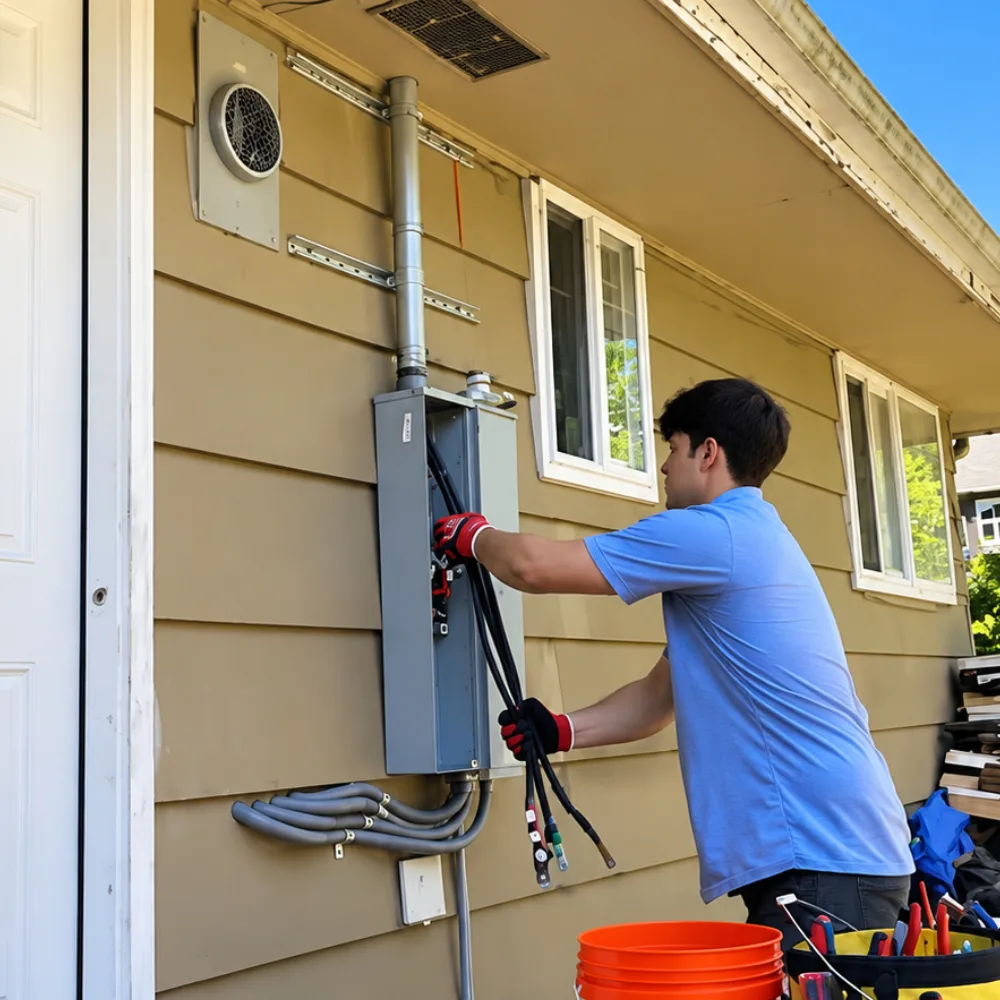
A lot of Lynnwood homeowners are making the same set of upgrades right now. A heat pump to replace an aging furnace or baseboard heat. An electric vehicle in the driveway. An induction range in place of the old gas or coil-top stove. Each one is a smart project on its own. Together, they ask a lot of an electrical panel that may have been installed decades ago. Before you sign for new equipment, it’s worth knowing whether your panel can carry it, and whether electrical panel replacements in Lynnwood belong in your plan.
Why Older Lynnwood Panels Run Out of Room
Many older homes in the area were built with 100-amp service, and some with even less. That was plenty when the biggest loads were a dryer and a water heater. It’s a different story once you start adding equipment that runs on 240 volts for hours at a time.
Panels hit their limit in two different ways:
- Capacity: the total amount of power your service can safely deliver, measured in amps.
- Space: the number of breaker slots available for new circuits.
A panel can run out of slots while it still has capacity to spare, or have open slots but no capacity left. The fix depends on which limit you’ve hit, so it’s worth finding out before anyone starts quoting equipment.
Age matters too. Panels from the 1950s through the 1980s sometimes include brands with known problems, such as Federal Pacific Stab-Lok and Zinsco. If you have one of those, replacement is usually the conversation regardless of what you’re adding.
What Each Upgrade Asks of Your Panel
Heat pumps
Most heat pump systems need a 240-volt circuit for the outdoor unit, and some systems include backup electric heat that adds a large load on the coldest days. The exact circuit size depends on the equipment, and the manufacturer’s installation instructions spell it out. Your HVAC installer handles the equipment itself. The electrical question, whether your panel can supply it, is where an electrician comes in.
EV chargers
A Level 2 charger runs on a dedicated 240-volt circuit and can draw power for hours overnight. The electrical code treats that kind of long-running draw as a continuous load, which affects how the circuit is sized. Some chargers can be set to a lower output or paired with load management that limits charging when the house is using a lot of power, which can sometimes avoid a service upgrade.
Induction ranges
Induction cooktops and ranges need their own 240-volt circuit, sized to the manufacturer’s specifications. If you’re switching from gas, that’s a brand-new circuit, which needs both capacity and an open space in the panel.
When it all adds up
Individually, any one of these may fit. The trouble starts when they stack up. A home that comfortably added an EV charger two years ago may not have room for a heat pump and an induction range on top of it.
How an Electrician Decides: The Load Calculation
Guessing isn’t good enough here. The electrical code lays out a method for calculating a home’s load that accounts for square footage, major appliances, heating and cooling equipment, and how likely those loads are to run at the same time. An electrician compares that number to your service rating to see how much room you actually have.
That calculation usually lands on one of three answers:
- Your panel has room. New circuits can be added as planned.
- You’re short on space, not capacity. A sub panel can add breaker slots without changing your service.
- You’re short on capacity. A main service upgrade, often to 200 amps, is the right move.
In Lynnwood, a service upgrade also involves Snohomish County PUD, since the meter and the utility connection are on their side of the line. In-House Electrical Services handles the full upgrade from the meter base through the panel and coordinates with the utility throughout the process.
Signs Your Panel Is Already at Its Limit
You don’t always need a new appliance to find out your panel is struggling. Watch for:
- Breakers that trip when two large appliances run at the same time
- Lights that dim when the dryer, oven or heating kicks on
- A panel packed full, with no open slots left
- A cover that feels warm, or buzzing and crackling from the panel
- A Federal Pacific or Zinsco panel, or a fuse box still in use
- A burning smell near the panel, which is an immediate safety concern and calls for service right away
What Electrical Panel Replacements in Lynnwood Usually Involve
Here’s how the process works with In-House Electrical Services:
- Home visit and assessment. A licensed technician looks at your current panel and talks through what you’re planning to add.
- Honest recommendation. We explain your options and recommend the safest, most cost-effective path, whether that’s new circuits, a sub panel or a full replacement.
- Upfront estimate. You get a clear quote before any work begins.
- Permits and installation. The City of Lynnwood issues electrical permits and inspects work inside city limits. We pull the required permits and install everything to code.
- Testing. Every circuit is tested before we leave.
Most panel replacements take 4 to 8 hours. A full main service upgrade can take a full day, depending on the complexity of the job. Your power will be off for part of that time, and we’ll tell you in advance what to expect.
Plan the Panel Before You Buy the Equipment
The order of operations matters. If you’re planning several electrification projects over the next few years, have your panel assessed before you buy anything. One upgrade sized for everything you plan to add is usually simpler than a series of patches as each new appliance arrives.
It’s also worth checking current programs with Snohomish County PUD before you commit to equipment, and asking about financing. In-House Electrical Services offers 0% interest financing for qualified customers, subject to credit approval, so a panel upgrade doesn’t have to hold up the rest of your plans.
Frequently Asked Questions
Will I need a new panel to add an EV charger in Lynnwood?
Not always. It depends on your current capacity, open space, and what else you’re running. A load calculation will show whether you can add the circuit, whether load management would work, or whether an upgrade makes sense.
Can a 100-amp panel handle a heat pump and an induction range?
Sometimes, but it’s often tight once you count everything else in the house. The answer comes from a load calculation on your specific home, not a rule of thumb.
Is a sub panel an alternative to a full replacement?
A sub panel solves a space problem by adding more breaker slots. It doesn’t add capacity. If your service itself is maxed out, a sub panel won’t fix that.
How long does a panel replacement take?
Most take 4 to 8 hours. A main service upgrade may take a full day, depending on the work involved.
Do I need a permit for a panel replacement in Lynnwood?
Yes. Panel replacements and service upgrades are permitted, inspected work. The City of Lynnwood issues electrical permits and conducts inspections, and we handle the permit for you.
Get Your Panel Ready for What’s Next
In-House Electrical Services has helped Puget Sound homeowners since 2009, working out of 1912 Everett Ave in Everett and serving Lynnwood and the surrounding area. If you’re planning a heat pump, EV charger or induction range, talk to us about electrical panel replacements in Lynnwood before you buy. Call 425-760-3203 or schedule online for an assessment.