
A breaker that won’t stay reset. An outlet that’s gone dead overnight. A faint buzzing behind a wall plate that wasn’t there last month. In a city where nearly half the housing stock predates 1980, these aren’t random glitches — they’re early signals from electrical systems that were never engineered for the way we use power today.
In House Electric has been tracing those signals back to their source in Puget Sound homes since 2009. We don’t patch over symptoms. We find the actual fault, repair it to current code, and walk you through exactly what we found and why it matters before we close up the panel.


Seattle’s median home was built around 1985, and roughly 43% of the city’s housing stock dates to before 1980 long before EV chargers, induction ranges, heat pumps, and multiple home offices became standard household load. That gap between what a panel was designed for and what it’s actually running is where most circuit problems start.
The national numbers back this up: ESFI estimates roughly 51,000 home electrical fires occur each year, with arcing faults alone responsible for more than 28,000 of them and over $700 million in annual property damage. A circuit that’s quietly overloaded or arcing inside a wall doesn’t announce itself loudly until it’s already a problem.


No two service calls look identical, but the underlying checklist doesn’t change it’s built around what actually fails in this region’s housing stock. Here’s what we walk through on every visit:

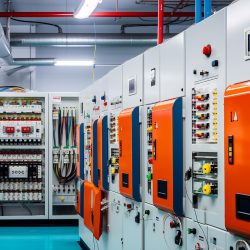
Finding the fault is half the job — the other half is making sure it doesn’t come back. Depending on what we find, that might mean rerouting an overloaded circuit, replacing a breaker that’s no longer rated for its load, adding AFCI or GFCI protection where current code requires it, or running a new dedicated circuit for a specific appliance. For larger issues, that can extend into a partial panel upgrade. Every repair is pulled and inspected through SDCI where required and built to WAC 296-46B and NEC standards, so the fix holds up under inspection and under daily use.



If your address falls anywhere in Ballard, Fremont, Capitol Hill, Wallingford, Greenwood, Phinney Ridge, Magnolia, Queen Anne, West Seattle, or the University District, we’re already doing this kind of work in your neighborhood on a regular basis. Searching for “circuit diagnosis and repair near me” and not seeing your specific block listed doesn’t mean we’re not covering it — call (425) 760-3203 or send a quick message through our contact form and we’ll confirm availability for your address directly.
A few things shouldn’t wait for a scheduled appointment: a burning smell that comes and goes near an outlet or panel, an outlet cover that’s warm to the touch, lights that brighten and dim with no obvious cause, one section of the house losing power while the rest stays on, or a breaker that resets fine but trips again within minutes. Any one of these on its own is worth a call — together, they’re a sign the underlying issue has been building for a while.

Flickering lights and tripping breakers rarely fix themselves, and waiting usually just moves the problem from “inconvenient” to “expensive.” In House Electric will find the actual cause, explain it in plain terms, and fix it to code the first time.
Call (425) 760-3203 or request a diagnosis online — we’ll get a licensed electrician to your Seattle home promptly.
That circuit is almost always carrying more than its rated load, has a short somewhere along its run, or is grounded improperly. We isolate the circuit and test it directly rather than guessing room by room.
Both, depending on what’s there. Knob-and-tube wiring (still found in some homes in Ravenna, Montlake, and Madison Park) and aluminum branch wiring from the 1960s–70s are documented fire risks, and some insurers will flag or decline coverage until they’re addressed.
Most visits run 45 to 75 minutes, depending on how many circuits are involved and how accessible your panel and crawlspace are.
Often, yes — if the fix is straightforward and we’re carrying the part on the truck. More involved repairs, like a partial rewire or breaker replacement requiring a permit, get scheduled as a follow-up visit.
It depends on the scope. Replacing a single breaker or repairing a connection typically doesn’t require one; adding new circuits or doing panel work generally does, under SDCI and WAC 296-46B. We’ll tell you upfront which category your repair falls into and handle the paperwork if it’s needed.
No — we isolate only the circuit being tested. The rest of your home keeps power throughout the visit unless the main panel itself is the issue.
